4 medicines that started as animal venom: snake, lizard, sea snail and rattlesnake peptides
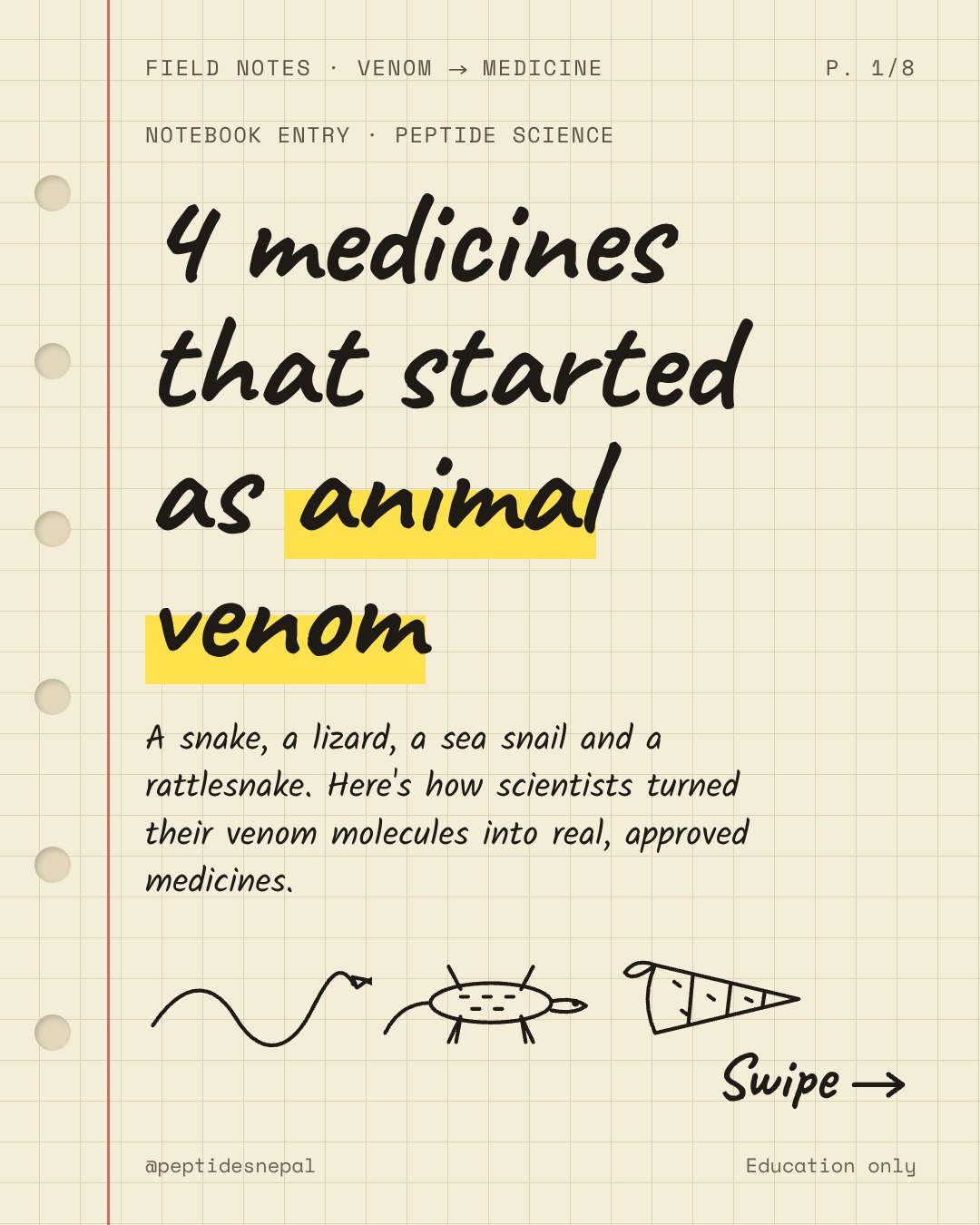
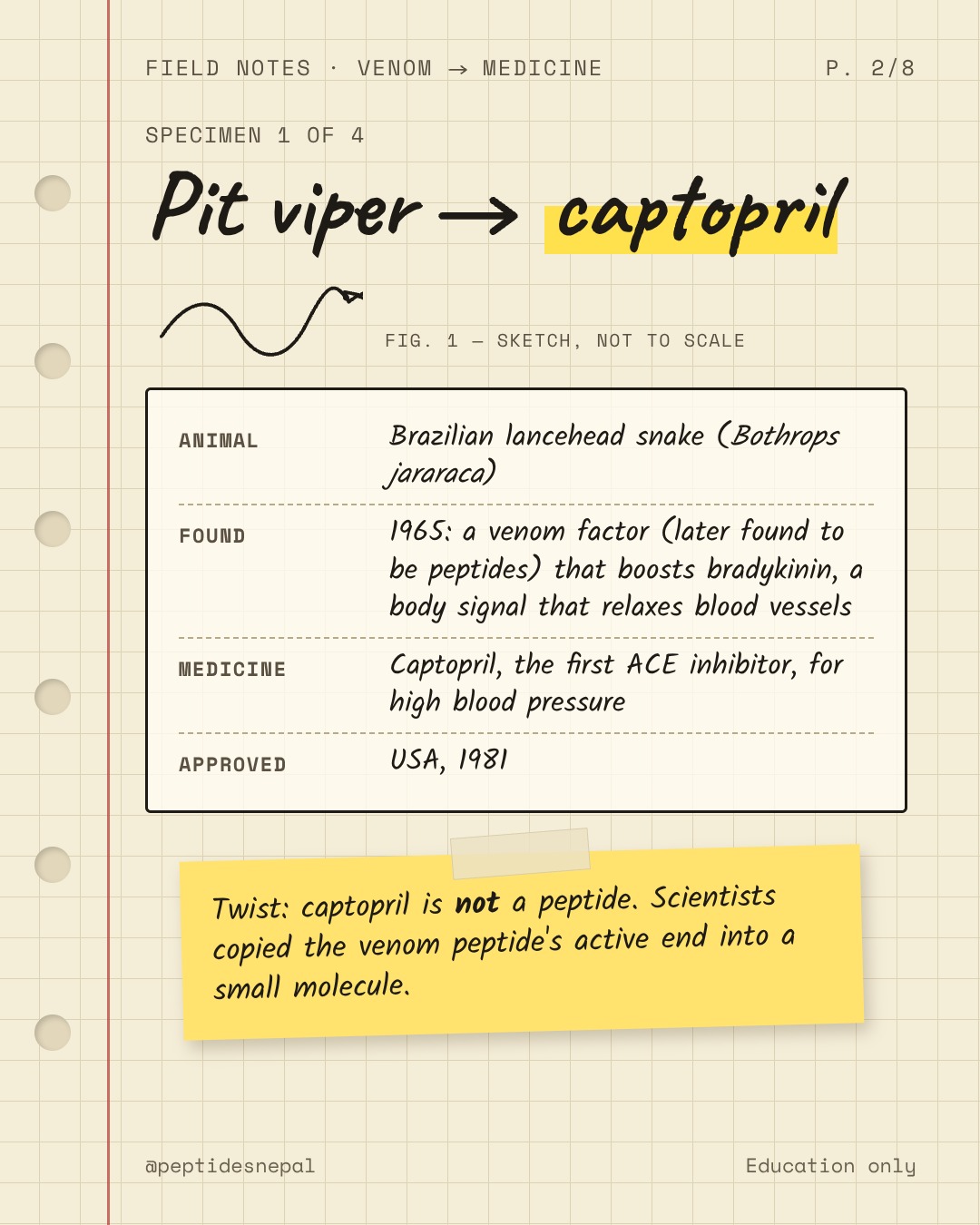
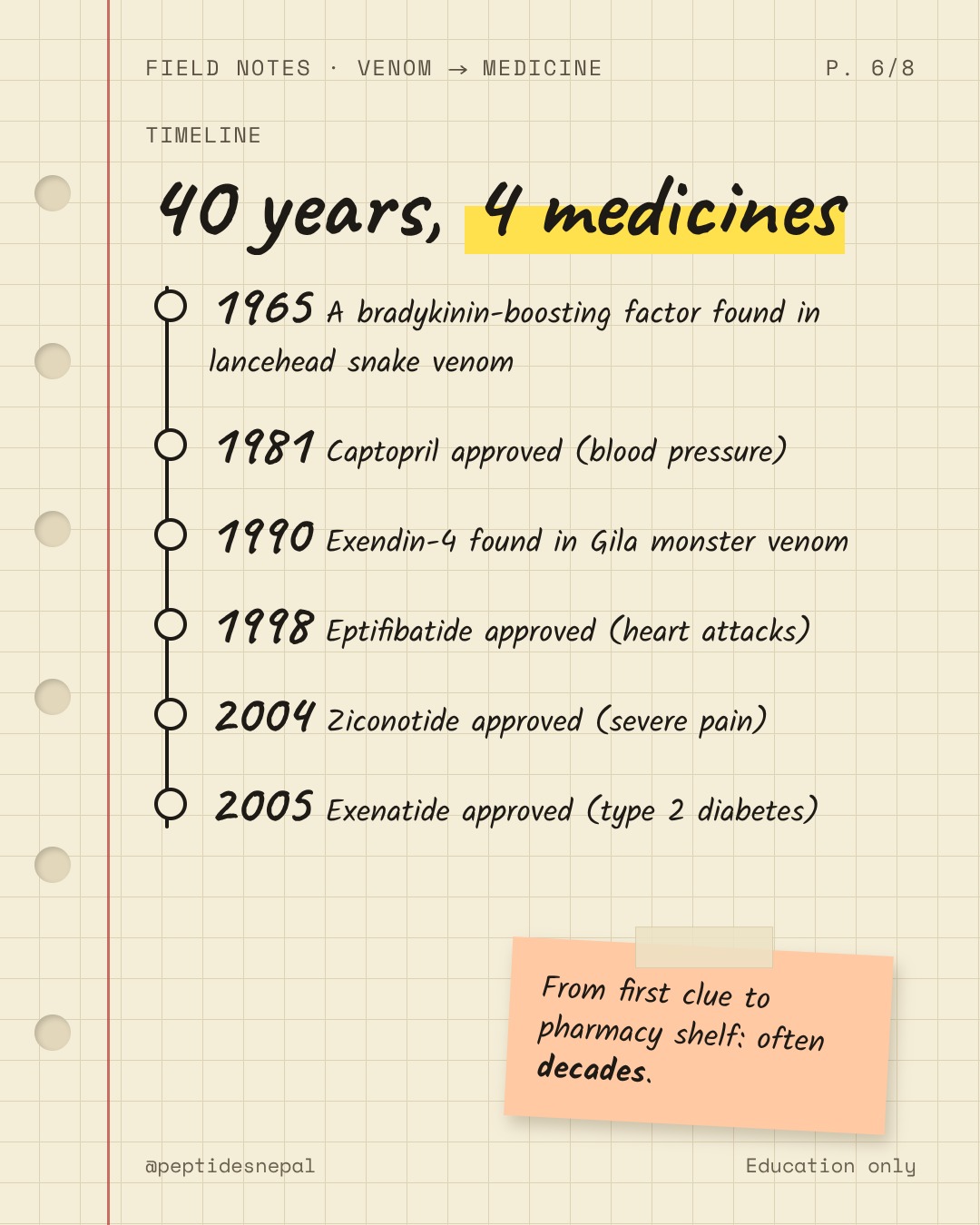
• Lancehead snake venom → captopril, the first ACE inhibitor (approved 1981)
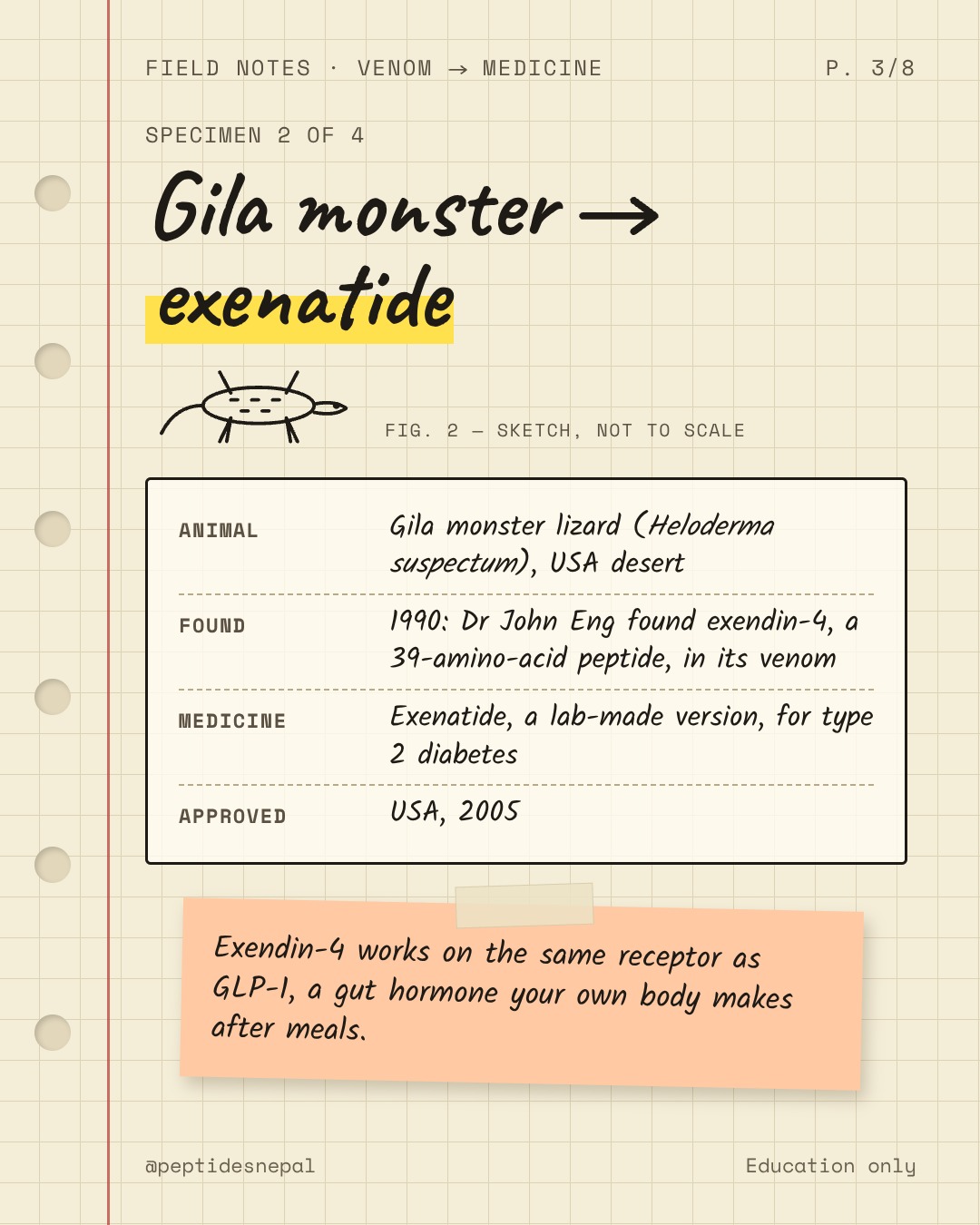
• Gila monster venom → exenatide for type 2 diabetes (2005)
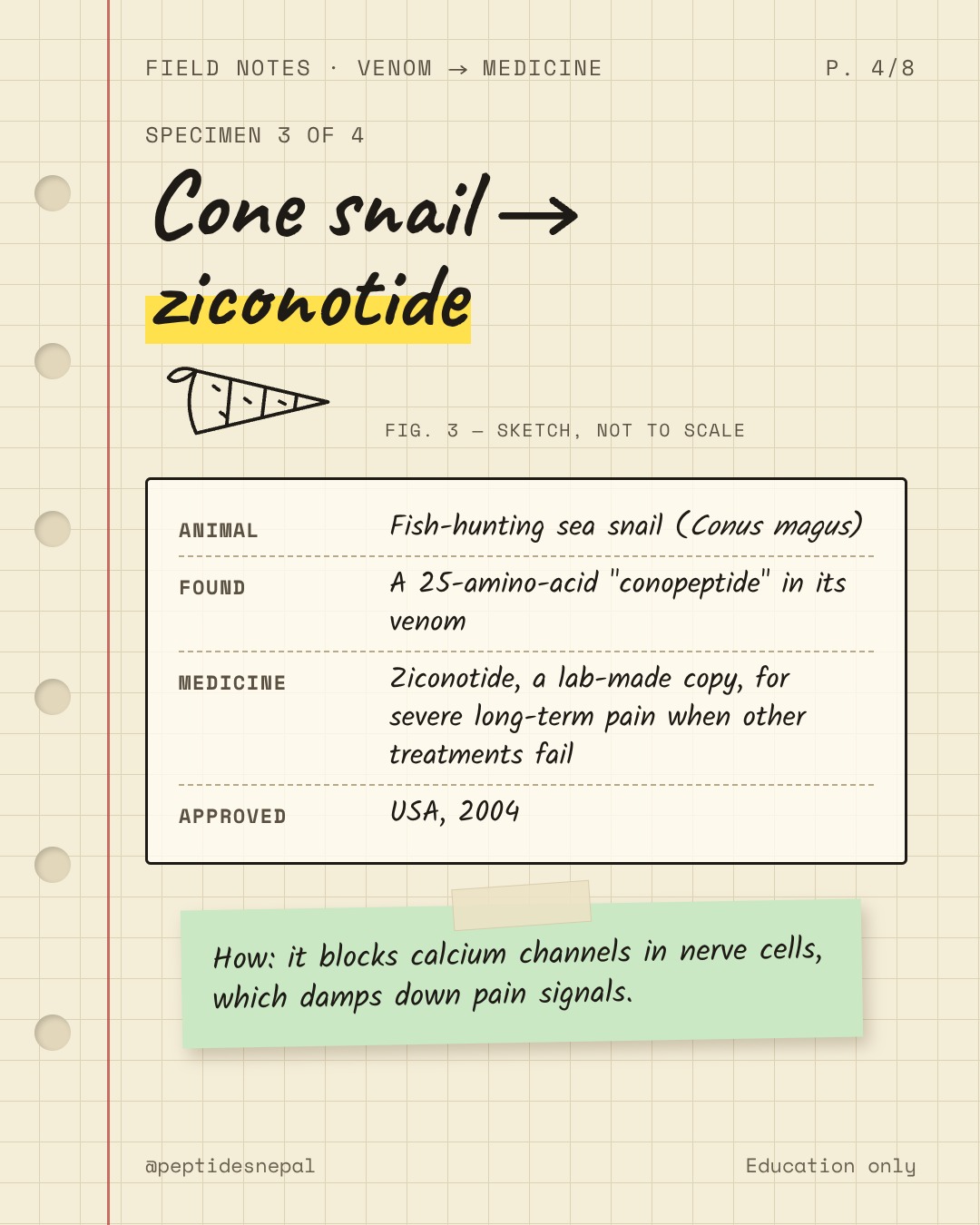
• Cone snail venom → ziconotide for severe long-term pain (2004)
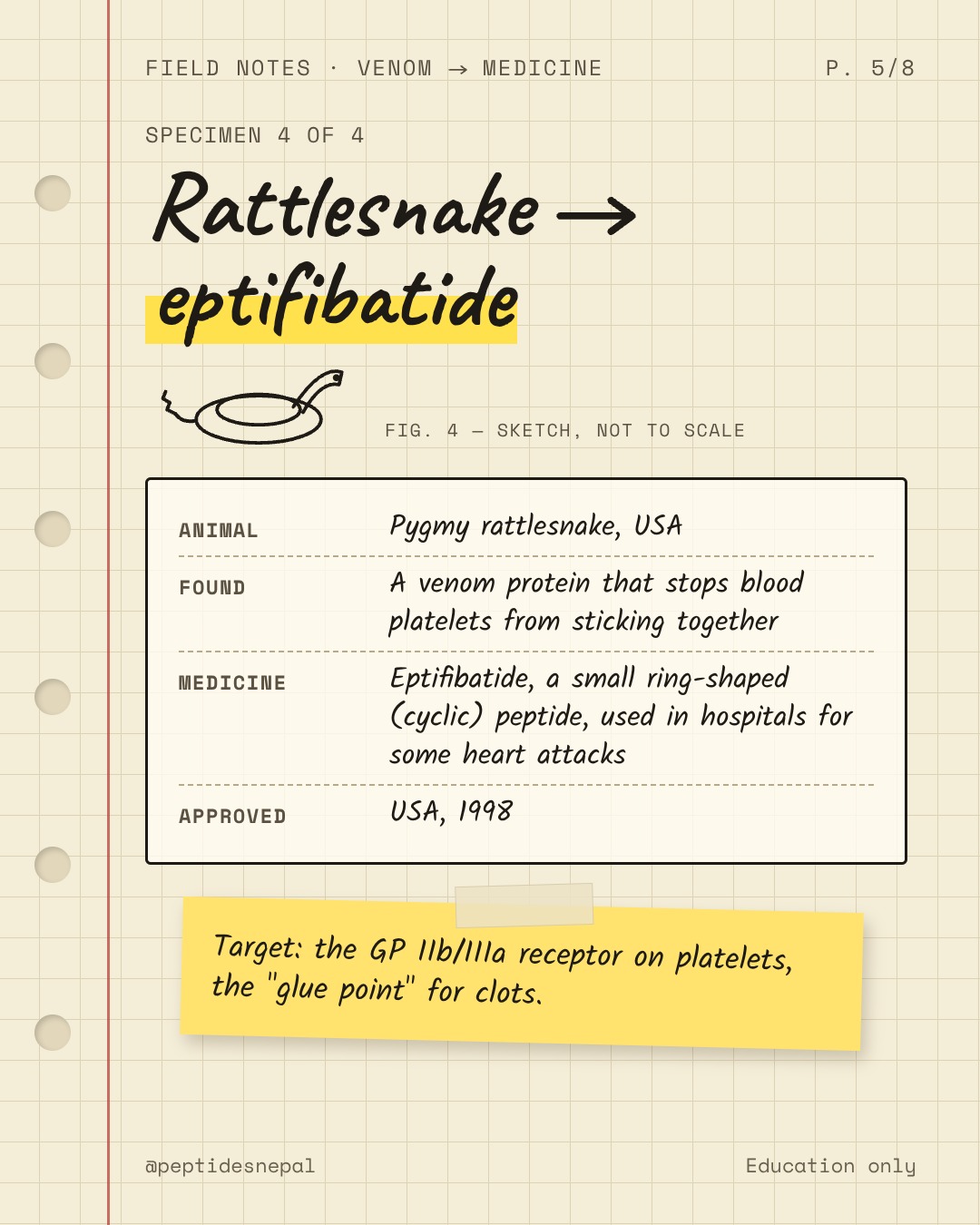
• Pygmy rattlesnake venom → eptifibatide, used in hospitals for some heart attacks (1998)
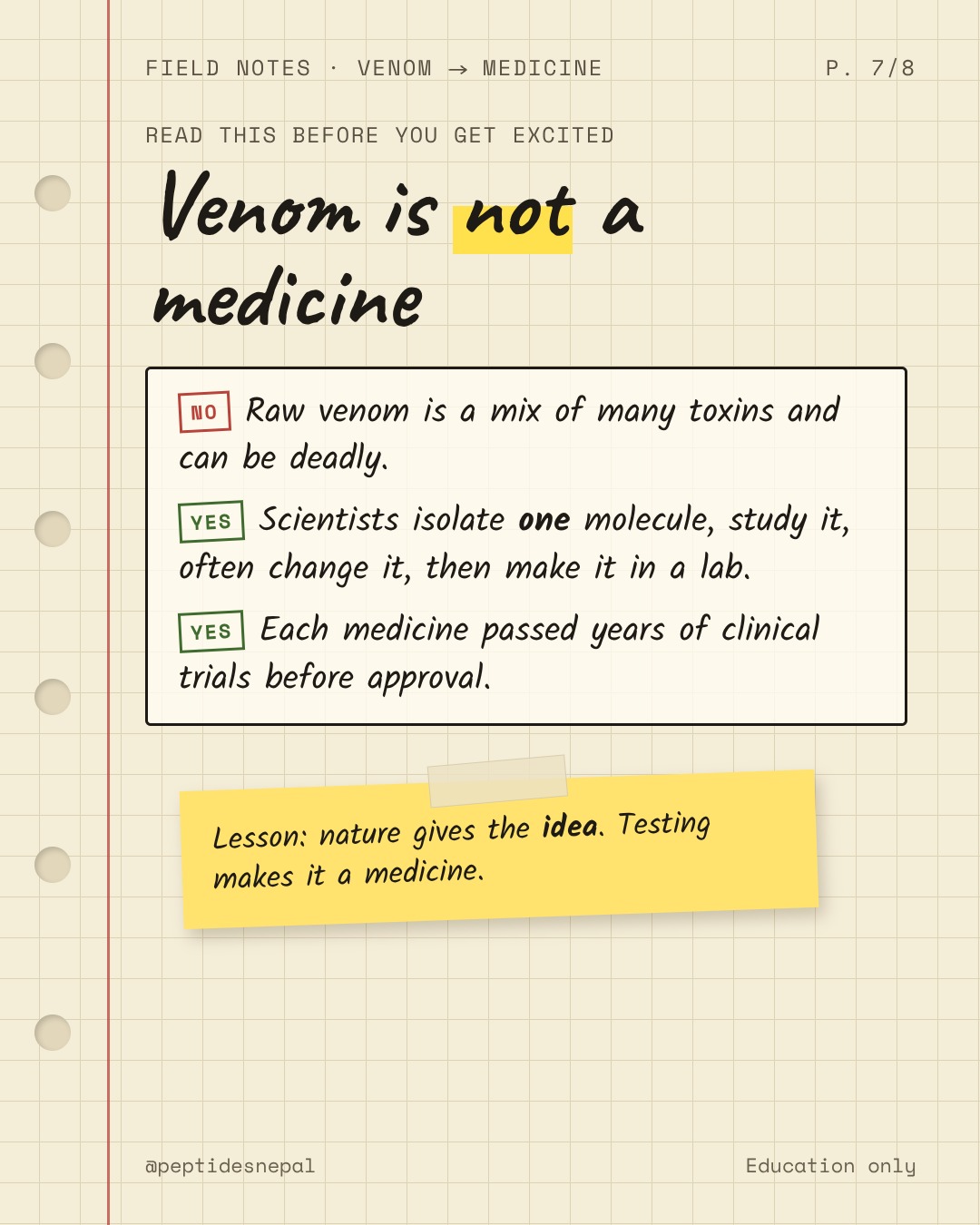
• The lesson: venom itself is dangerous. Scientists take ONE molecule, study it, and test it for years.
📌 Save this for the next "nature cures everything" debate.
📤 Send this to the friend who loves wildlife documentaries.
Which one surprised you most: snake, lizard, snail or rattlesnake?
Follow @peptidesnepal for more info
Visit our website — link in bio for detailed info like this!
Education only — not medical advice.
Sources
Sources 📚
• Captopril: Ferreira SH. A bradykinin-potentiating factor (BPF) present in the venom of Bothrops jararaca. Br J Pharmacol, 1965 (PubMed 14302350); StatPearls, ACE Inhibitors (NCBI Bookshelf NBK430896): first ACE inhibitor, approved 1981; Univ. of Bristol Molecule of the Month: Captopril.
• Exenatide: US National Institute on Aging, "Exendin-4: From lizard to laboratory… and beyond"; NLM MeSH: Exenatide (39-amino-acid exendin-4 from Gila monster venom).
• Ziconotide: US FDA PRIALT prescribing information (NDA 021060; first label 2004).
• Eptifibatide: US FDA INTEGRILIN label (NDA 20-718, 1998); StatPearls, Eptifibatide (NCBI Bookshelf NBK541066).