What is a peptide, really?
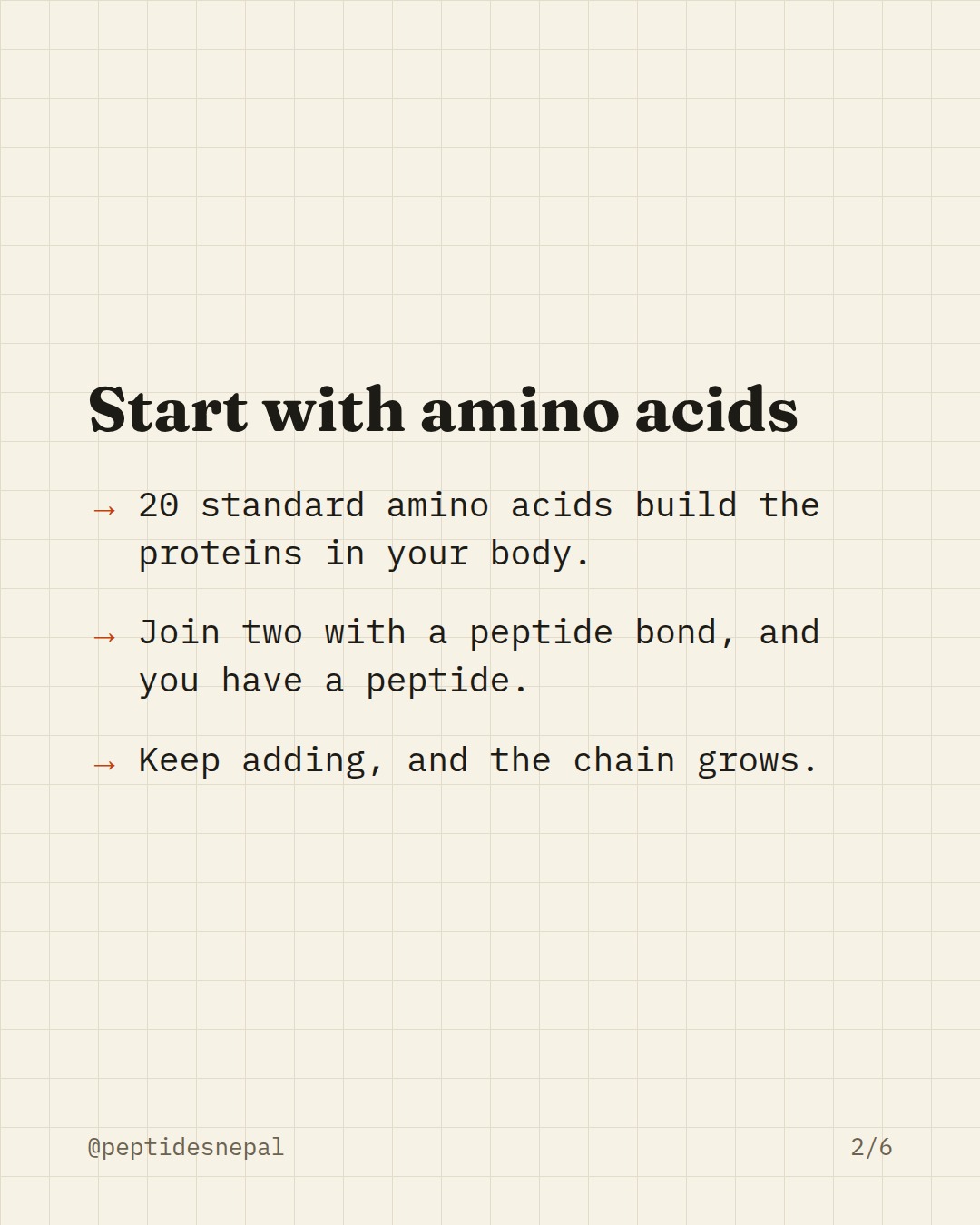
→ Amino acids are the building blocks. 20 standard ones make the proteins in your body.
→ Link amino acids with peptide bonds and you get a peptide.
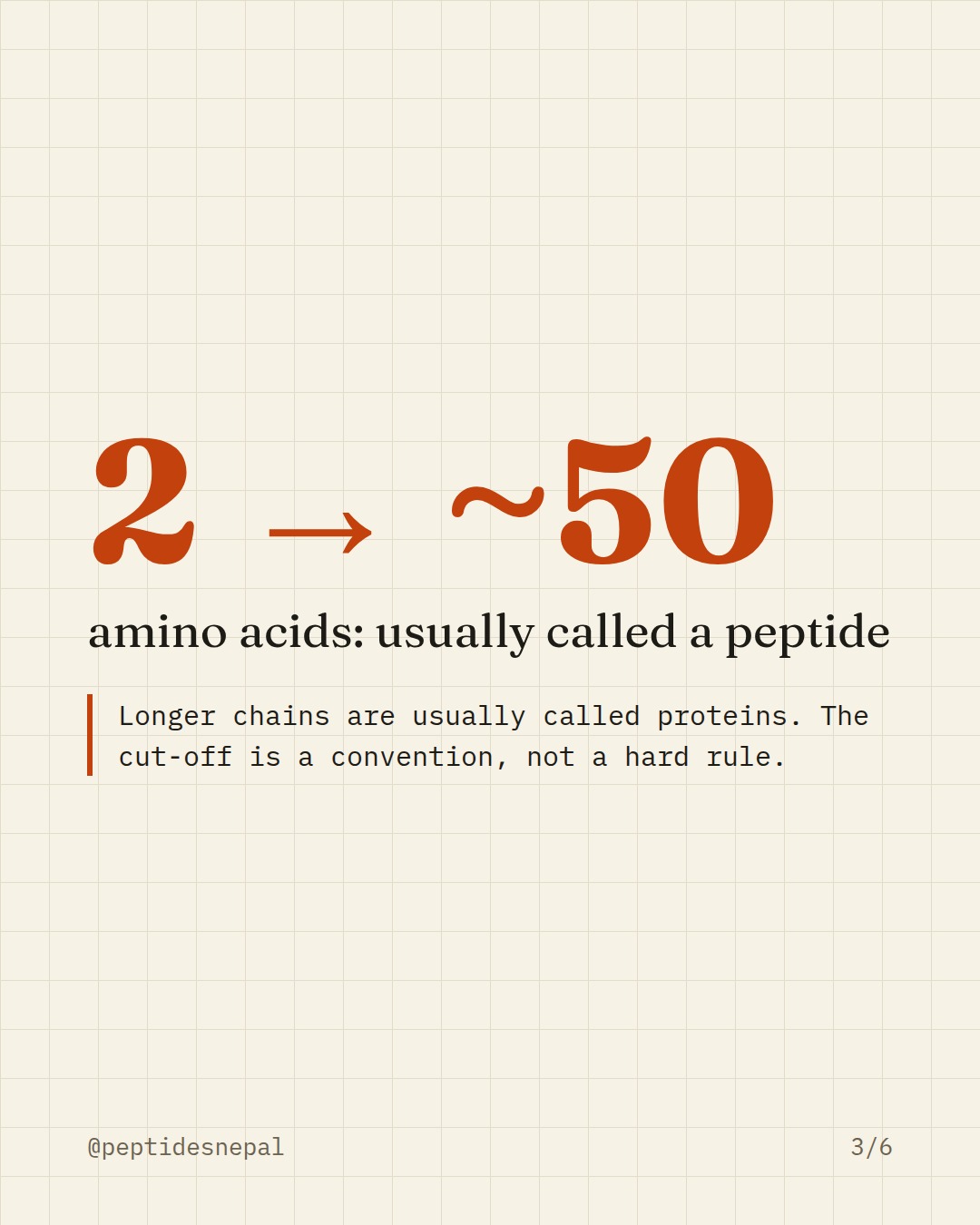
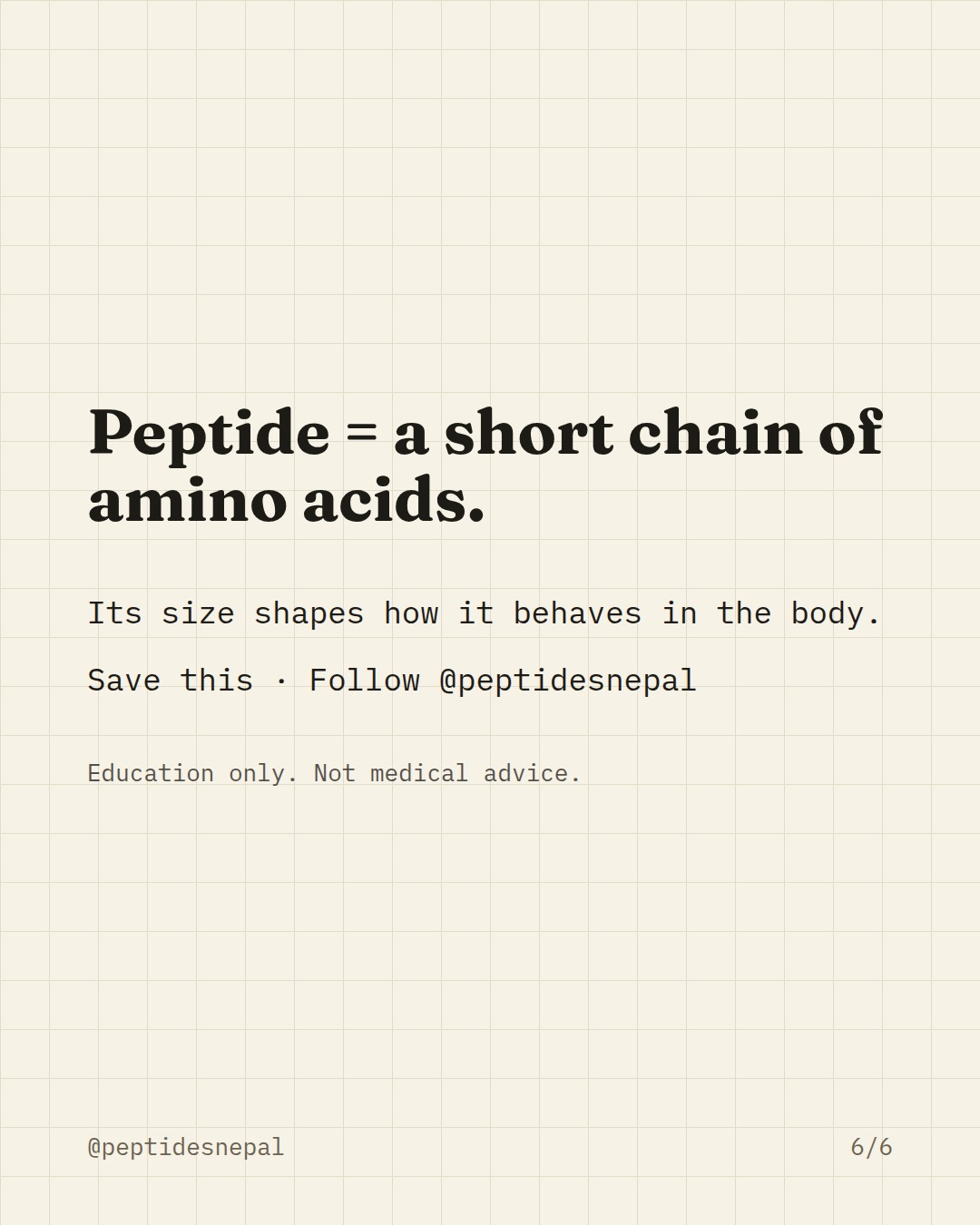
→ About 2–50 amino acids: usually called a peptide. Longer: usually a protein. The line is a convention.
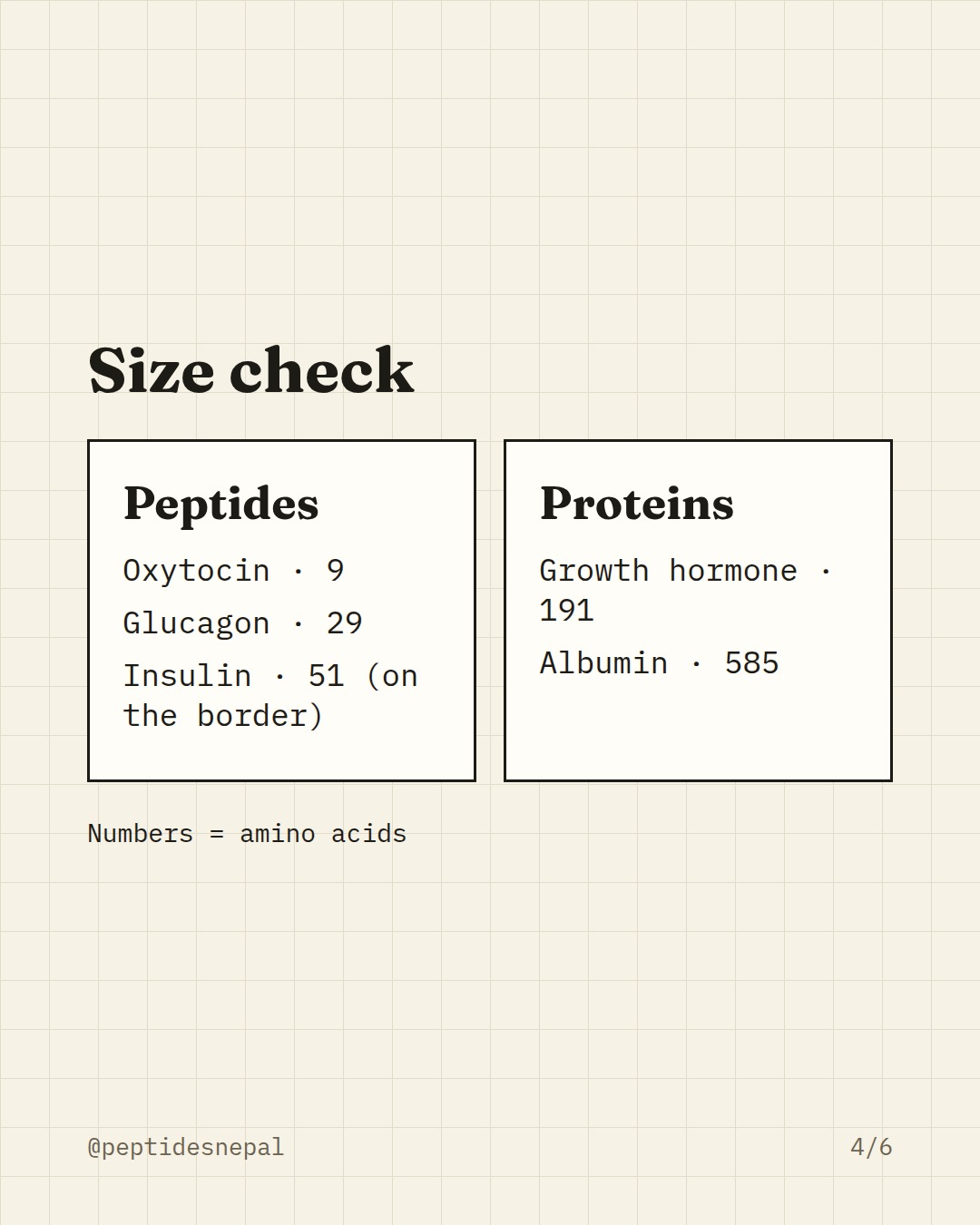
→ Examples: oxytocin (9), glucagon (29), insulin (51), growth hormone (191).
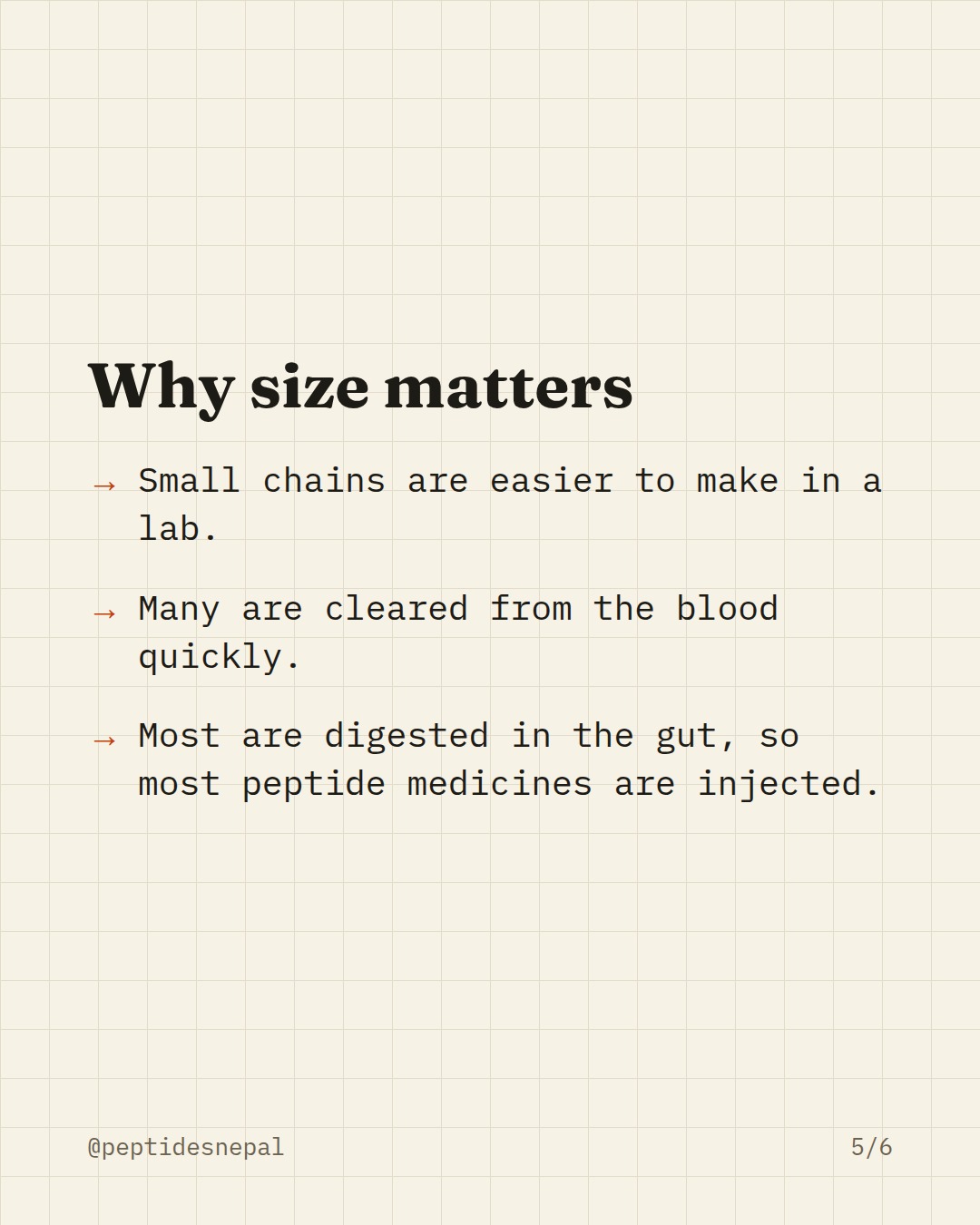
→ Size matters: most peptides are digested in the gut, so most peptide medicines are injected.
📌 Save this as your starting point.
📤 Send it to a friend who keeps hearing the word "peptides".
Before today, could you explain what a peptide is? Yes or no?
Follow @peptidesnepal for more info
Visit our website — link in bio for detailed info like this!
Education only — not medical advice.
Sources
Sources 📚
• Wang L, et al. Therapeutic peptides: current applications and future directions. Signal Transduction and Targeted Therapy, 2022;7:48.
• Amino-acid counts: UniProt — OXT (oxytocin), GCG (glucagon), INS (insulin), GH1 (growth hormone), ALB (albumin).