"It worked in rats!" So why doesn't that mean it works in you?
Animal studies are an important first step. But humans are not big rats.
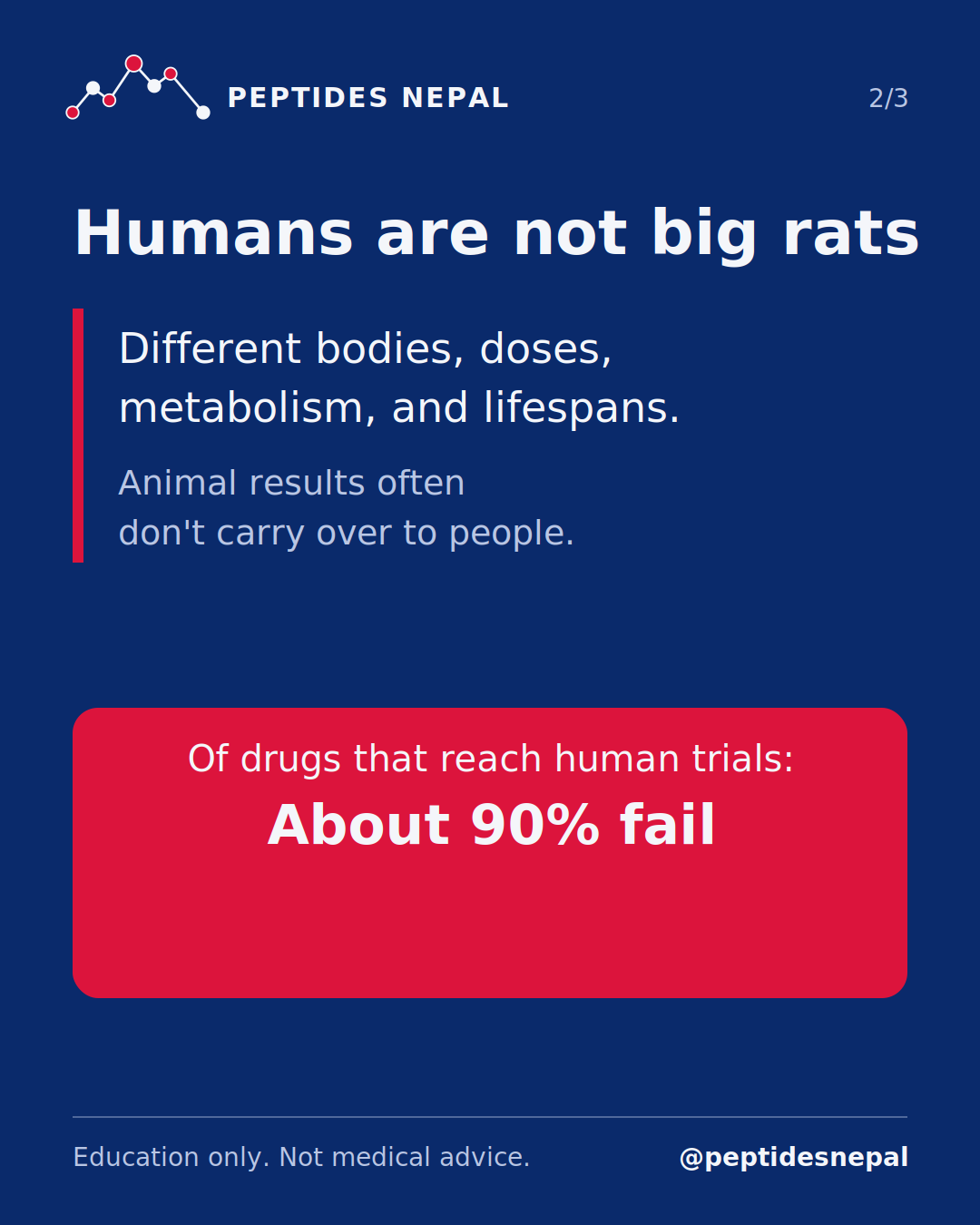
Different bodies, doses, metabolism, and lifespans mean results often don't carry over.
📊 About 90% of drug candidates that reach human clinical trials fail, mostly because they don't work well enough or aren't safe enough.
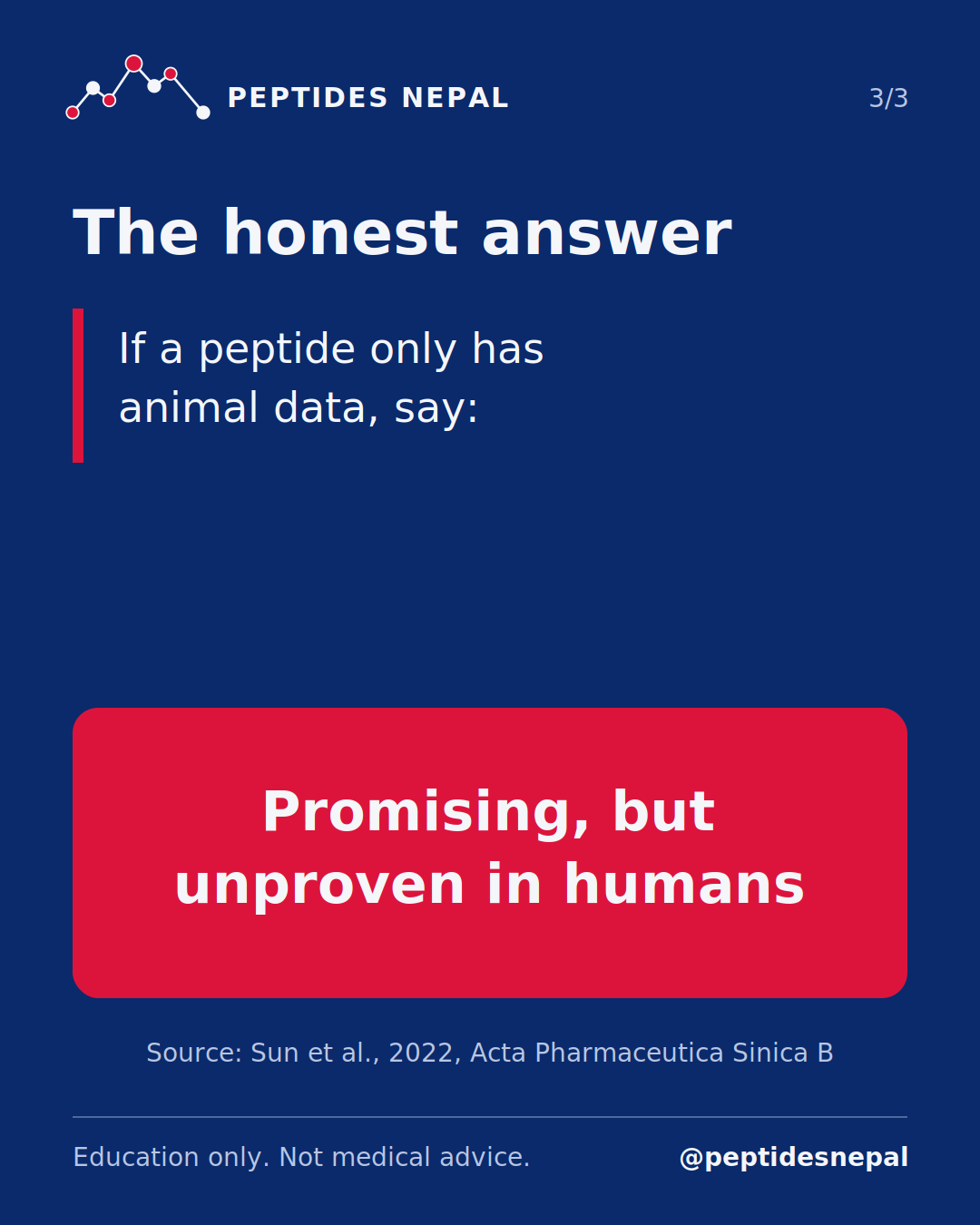
So when a peptide has only animal data, the honest answer is:
"Promising, but unproven in humans."
Source: Sun et al., 2022, Acta Pharmaceutica Sinica B: "Why 90% of clinical drug development fails and how to improve it?"
⚠️ Education only. Not medical advice.