Peptides Nepal

Posts › Peptide marketing red flags: how to spot hype before you…

Peptide marketing red flags: how to spot hype before you believe it
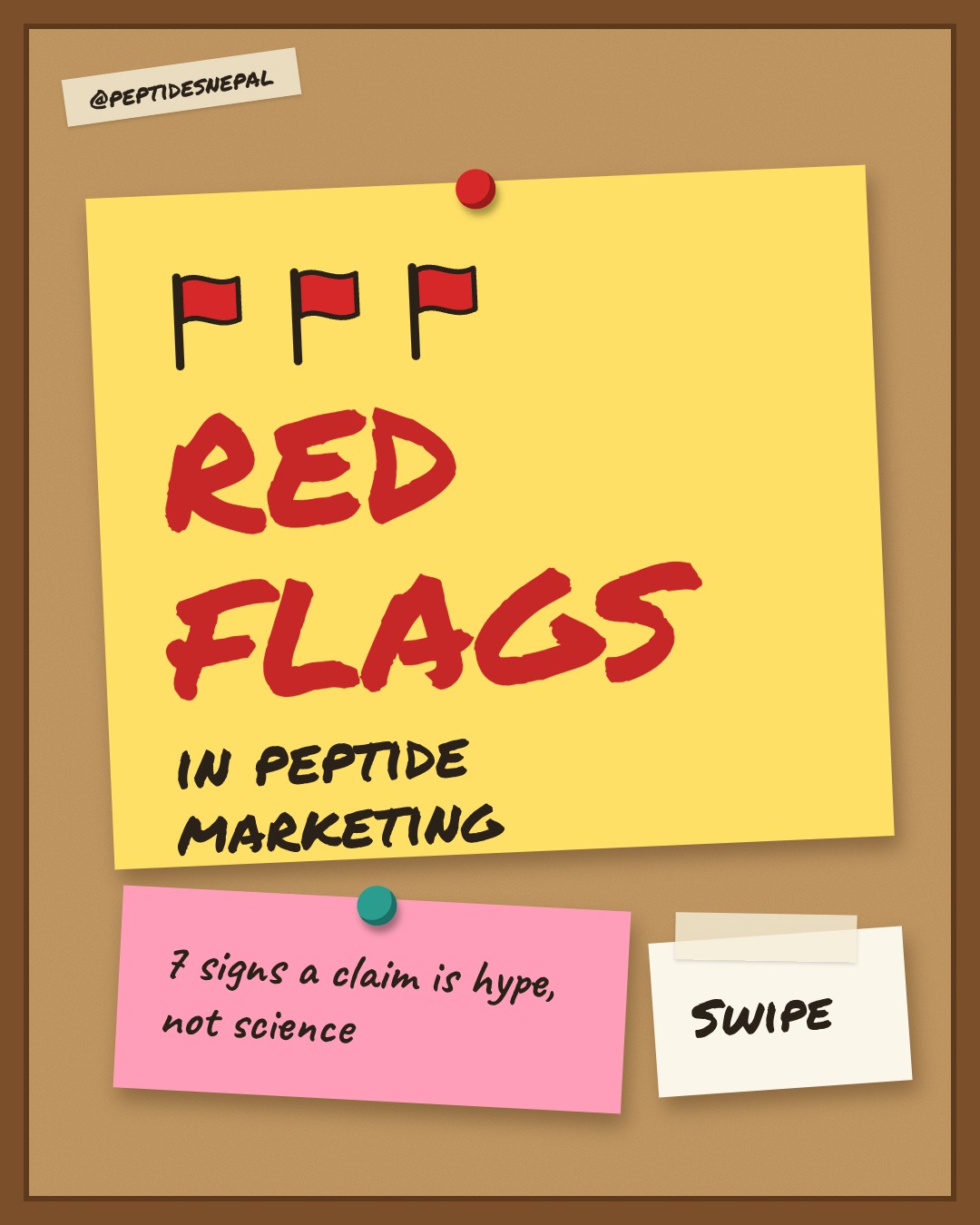
Red flags in peptide marketing: 7 signs a claim is hype, not science
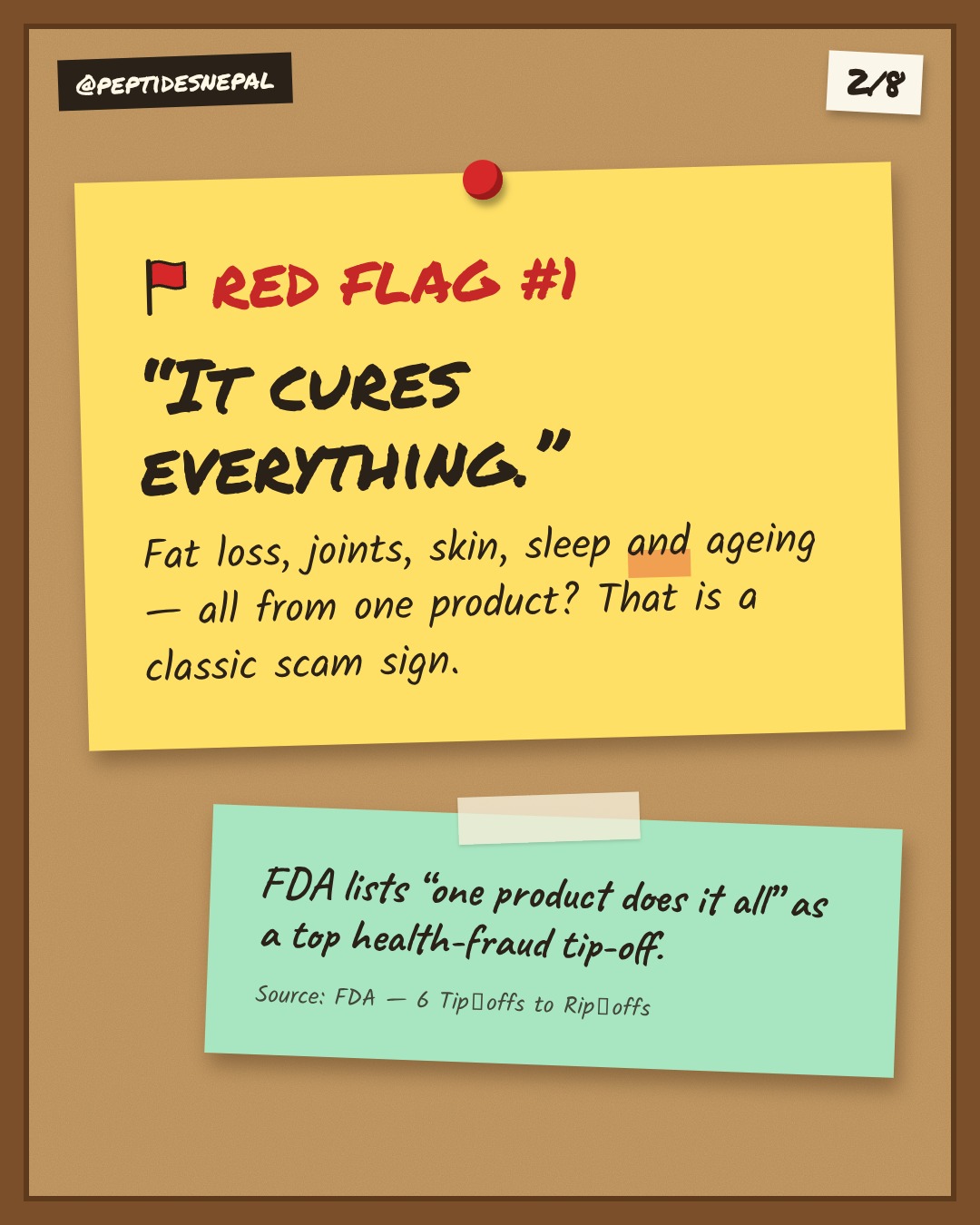
Red flag 1: 'It cures everything.' FDA lists 'one product does it all' as a health-fraud tip-off.
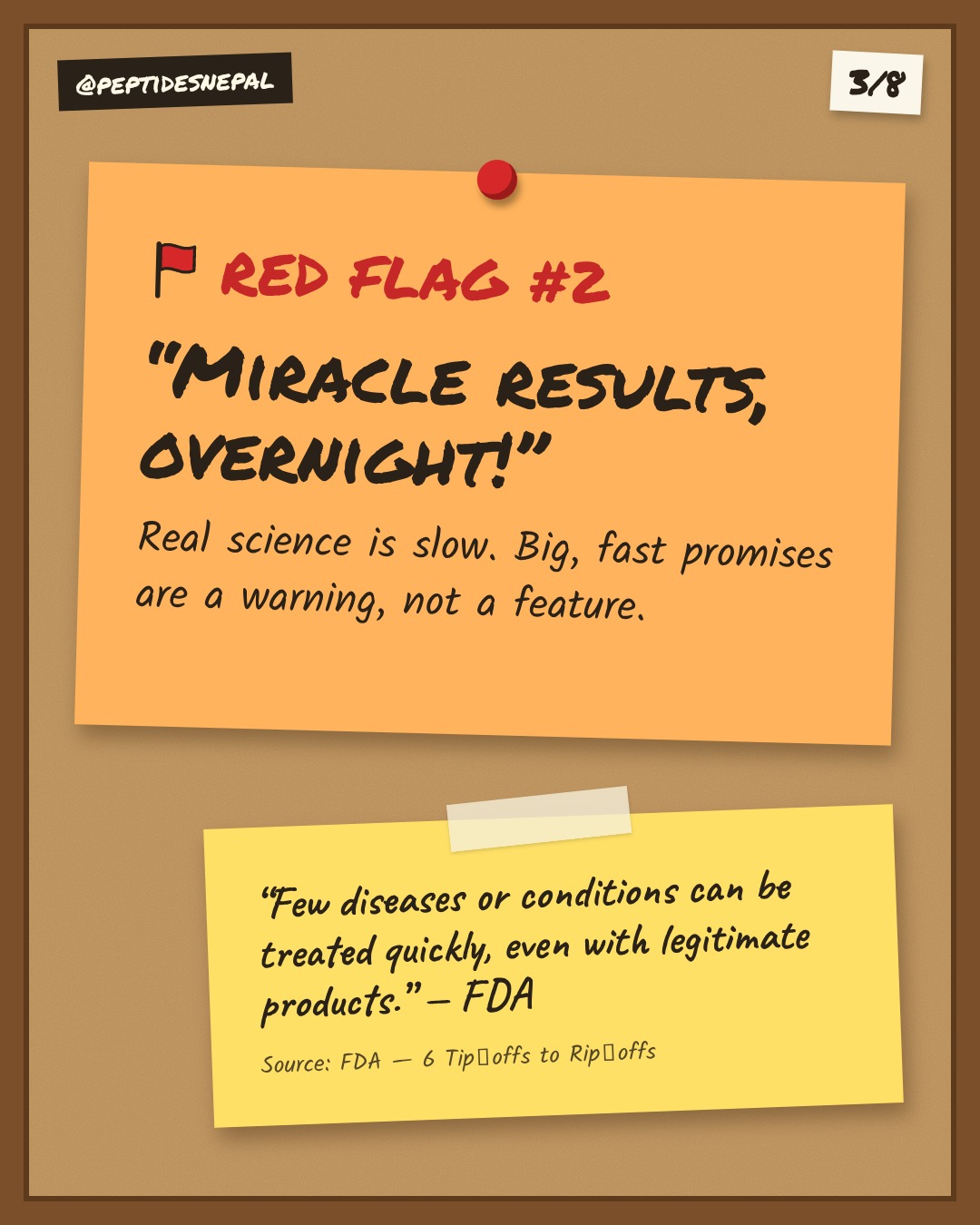
Red flag 2: 'Miracle results overnight.' FDA: few conditions can be treated quickly, even with legitimate products.
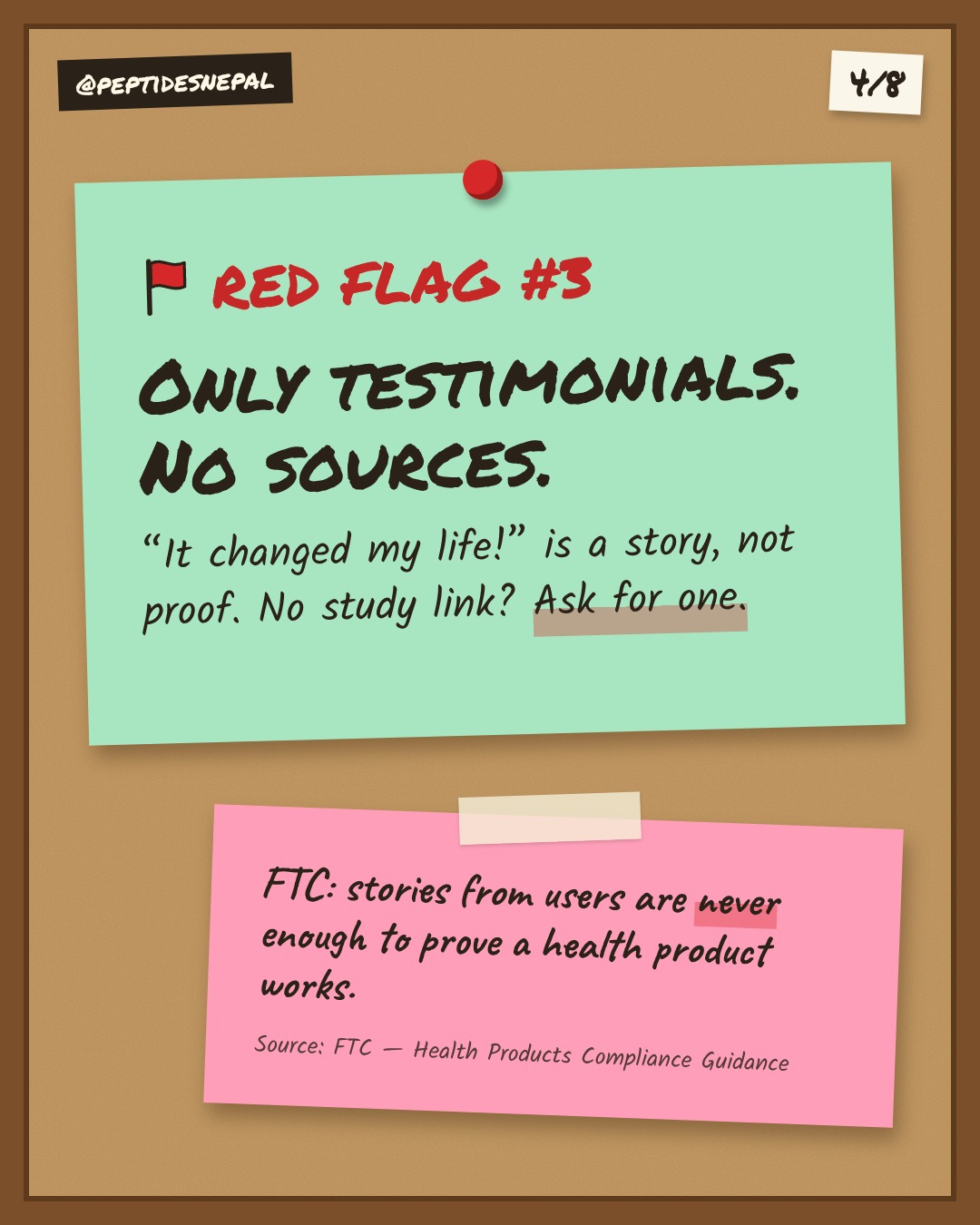
Red flag 3: only testimonials, no sources. FTC: user stories are never enough to prove a health product works.
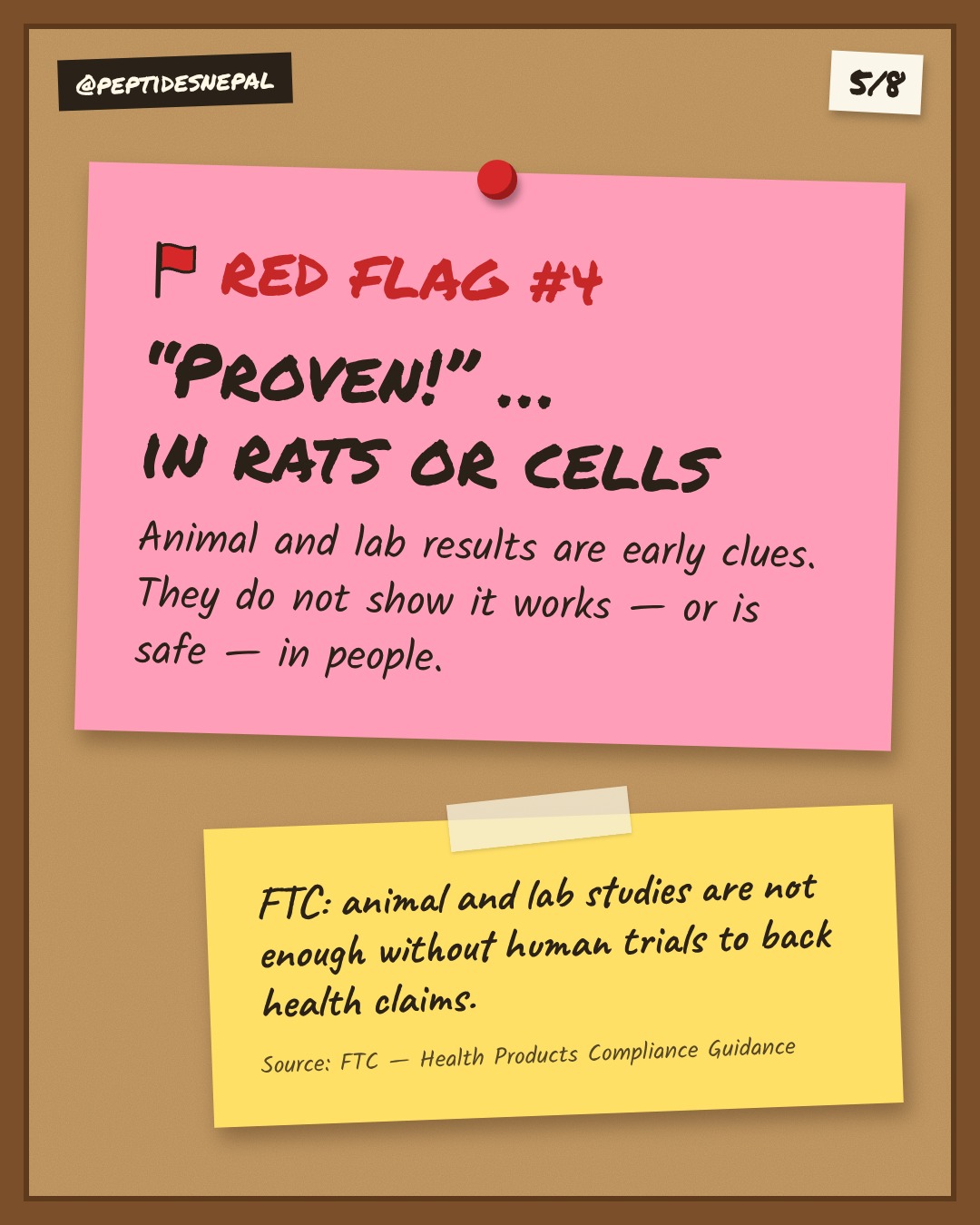
Red flag 4: 'Proven' only in rats or cells. FTC: animal and lab studies are not enough without human trials.
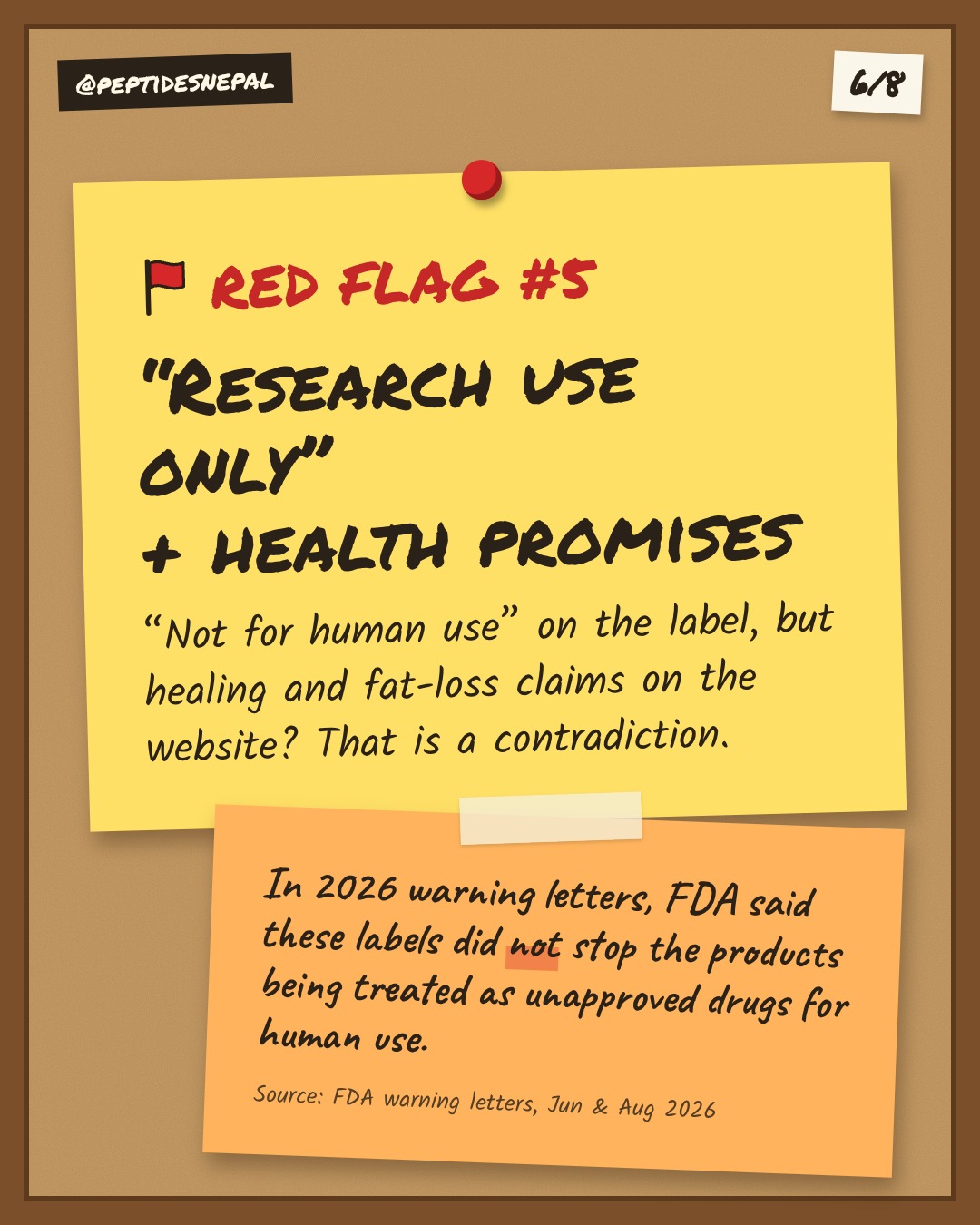
Red flag 5: 'Research use only' label plus health promises. FDA 2026 warning letters treated such products as unapproved drugs.
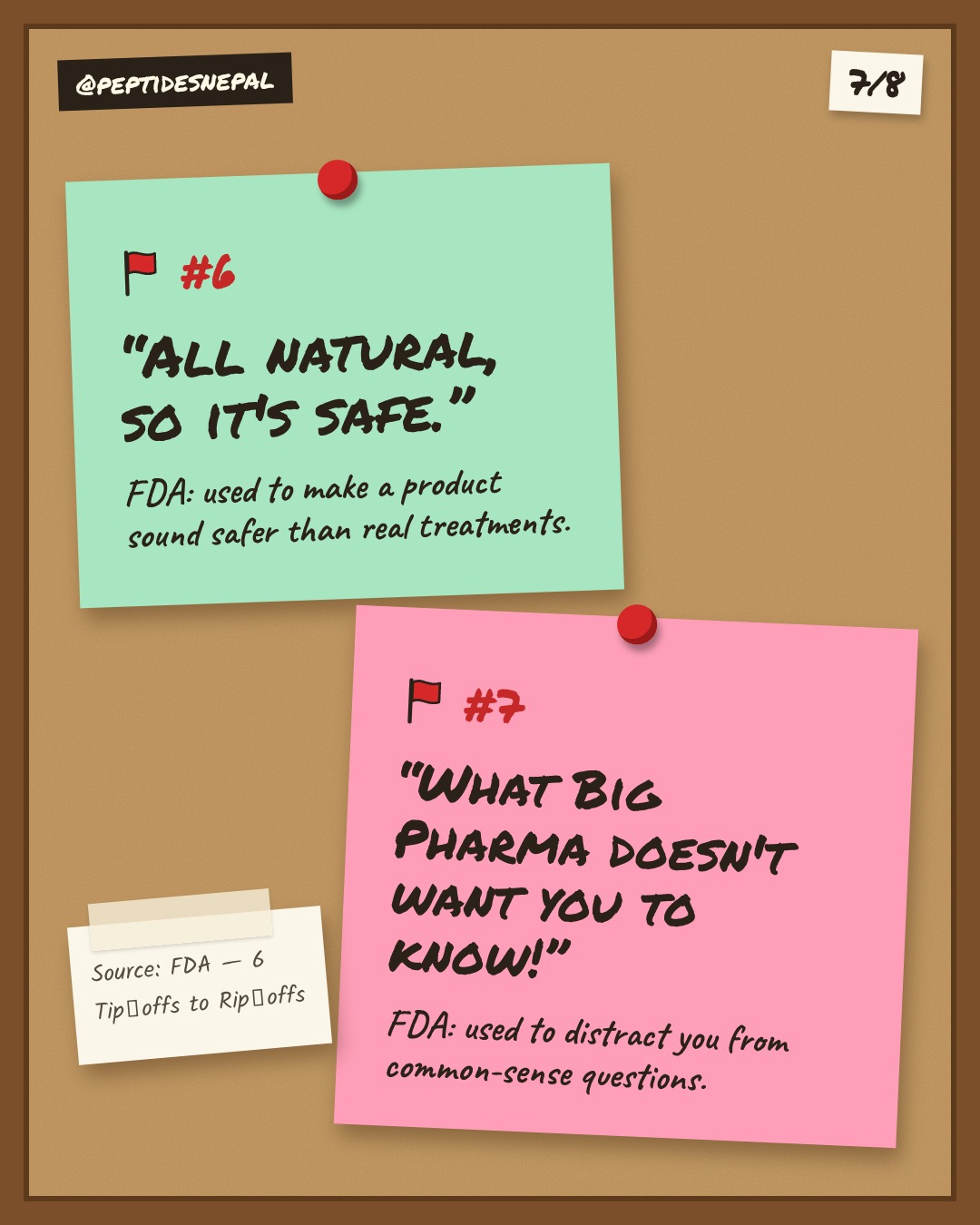
Red flags 6 and 7: 'All natural, so it's safe' and 'What Big Pharma doesn't want you to know'.
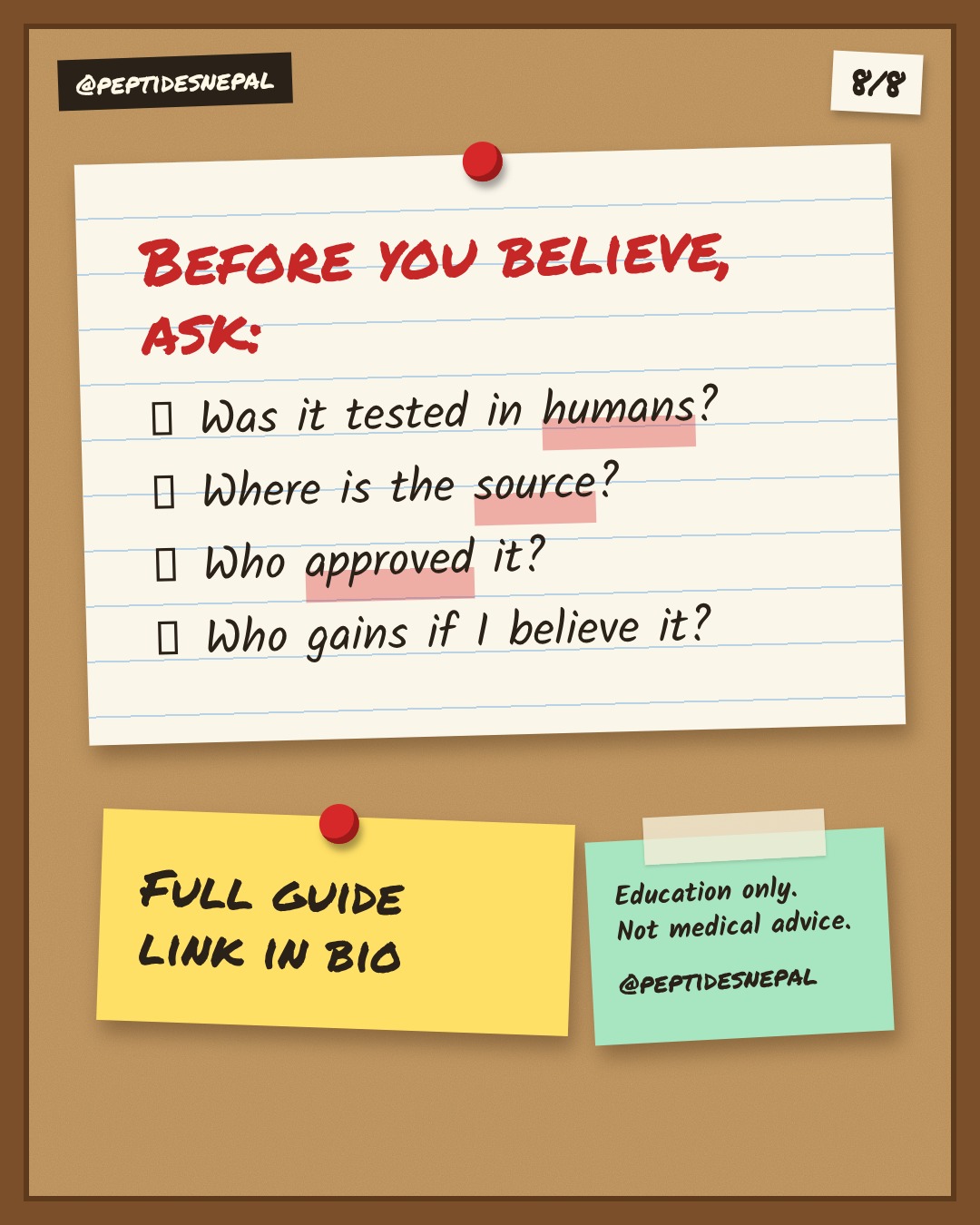
Checklist: Was it tested in humans? Where is the source? Who approved it? Who gains if I believe it? Education only.

If a peptide post promises a miracle, that's your cue to slow down.

→ "Cures everything" and "results overnight" are classic health-fraud signs (FDA).
→ Testimonials are stories, not evidence (FTC).
→ "Proven" in rats or cells is not proven in people.
→ A "research use only" label next to health promises is a contradiction. The FDA called this out in 2026 warning letters.

📌 Save this checklist for the next ad that looks too good to be true.
📤 Send it to the gym friend who believes every reel.

Which red flag have you spotted most online? #1–#7, drop it below 👇

Follow @peptidesnepal for science, not hype.

Education only — not medical advice.

Sources

Sources 📚
• FDA – 6 Tip-offs to Rip-offs: Don't Fall for Health Fraud Scams
• FTC – Health Products Compliance Guidance
• FDA warning letters: Wholesale Peptide (17 Jun 2026), Peak Performance Peptides (24 Aug 2026)

View this post on Instagram →