How are peptides made? 3 methods, explained like a textbook
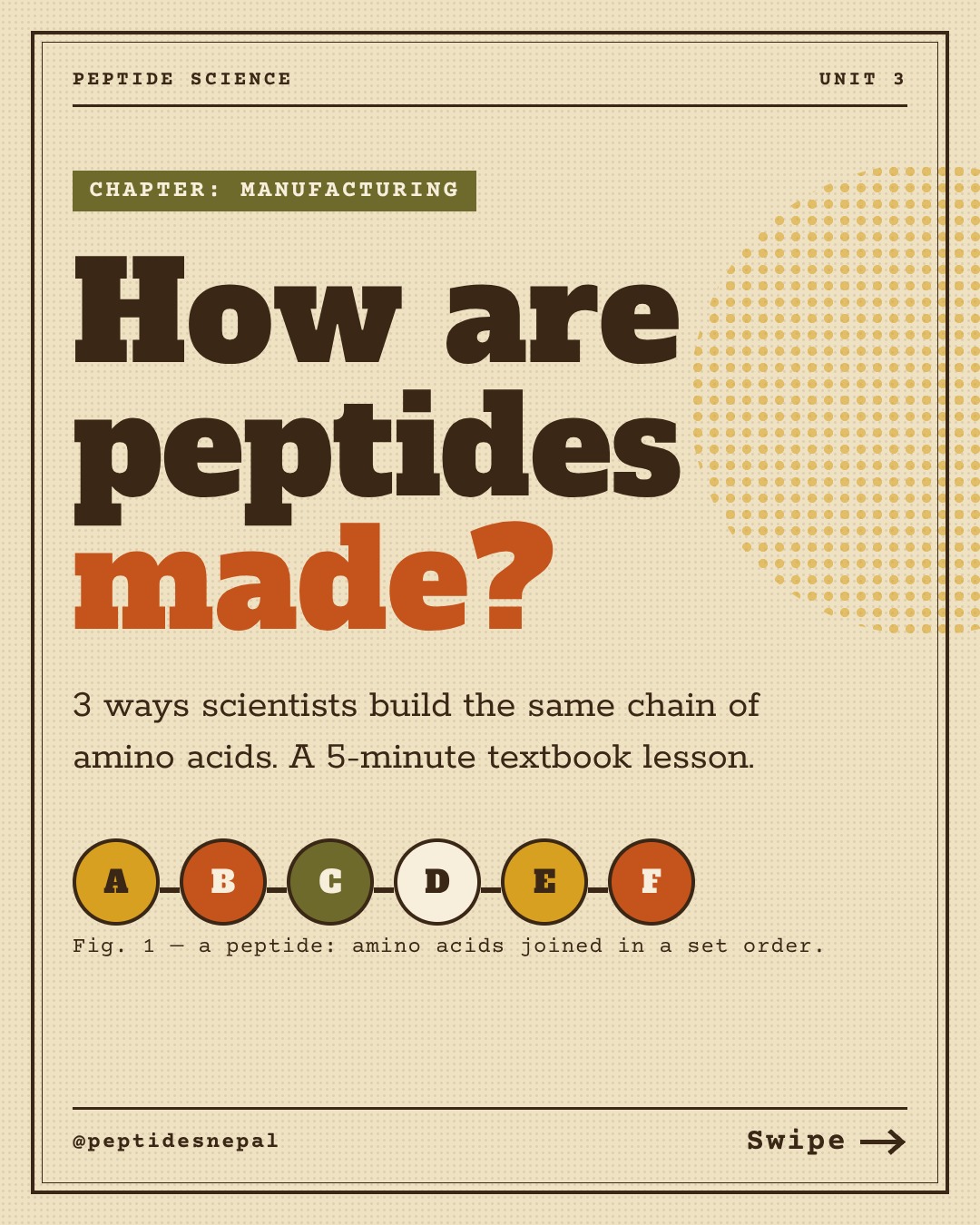
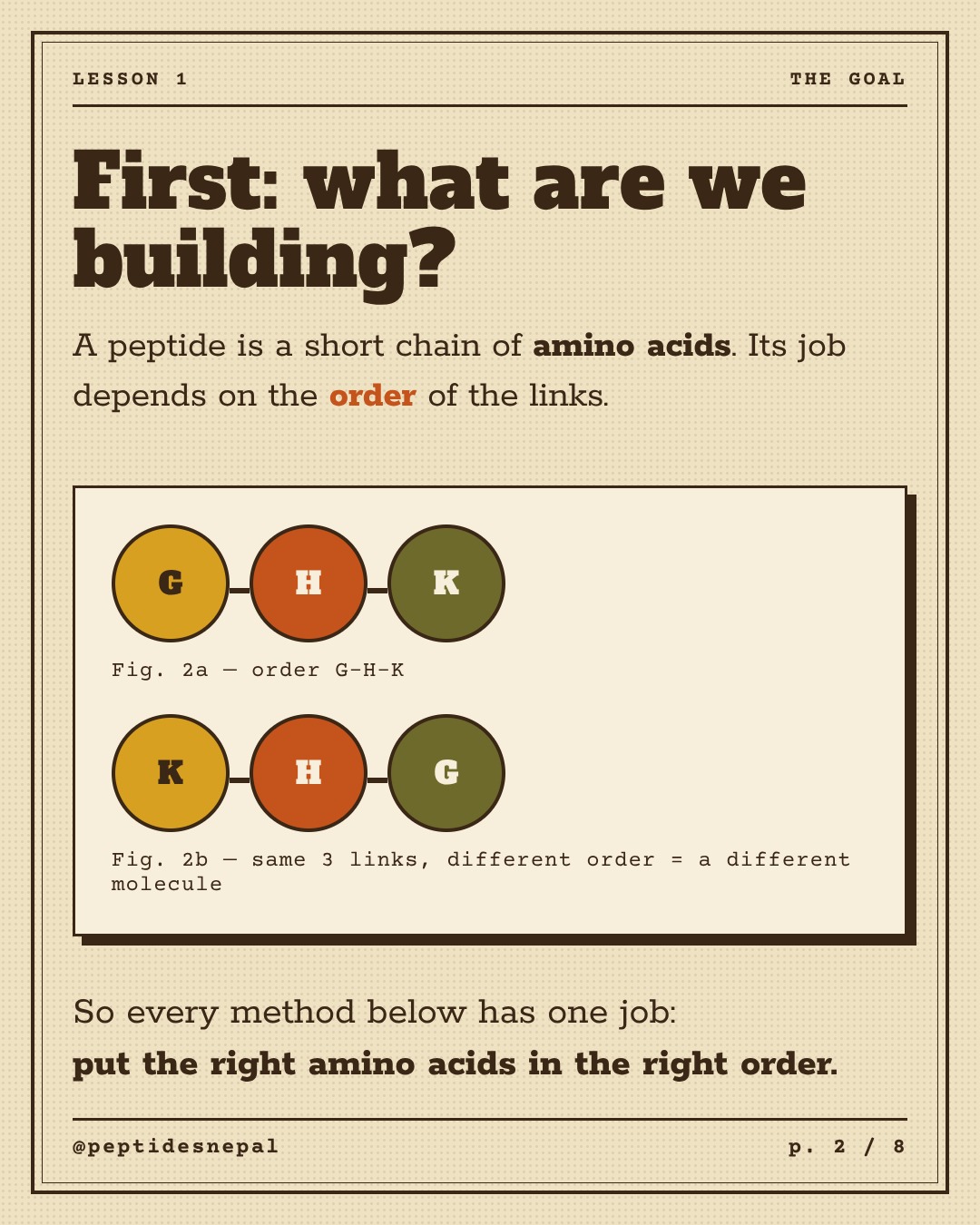
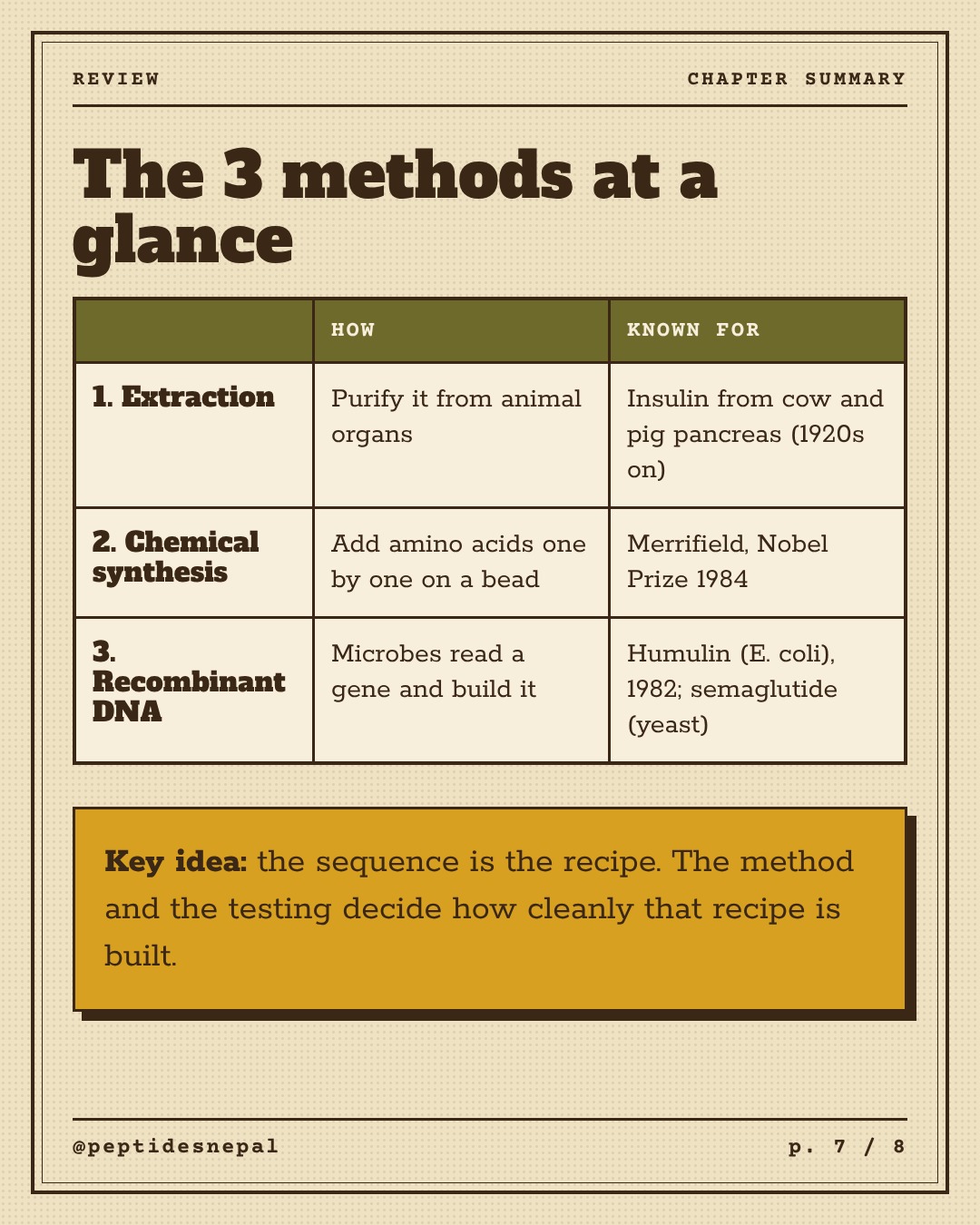
Every peptide is a chain of amino acids in a set order. Science has 3 main ways to build that chain:
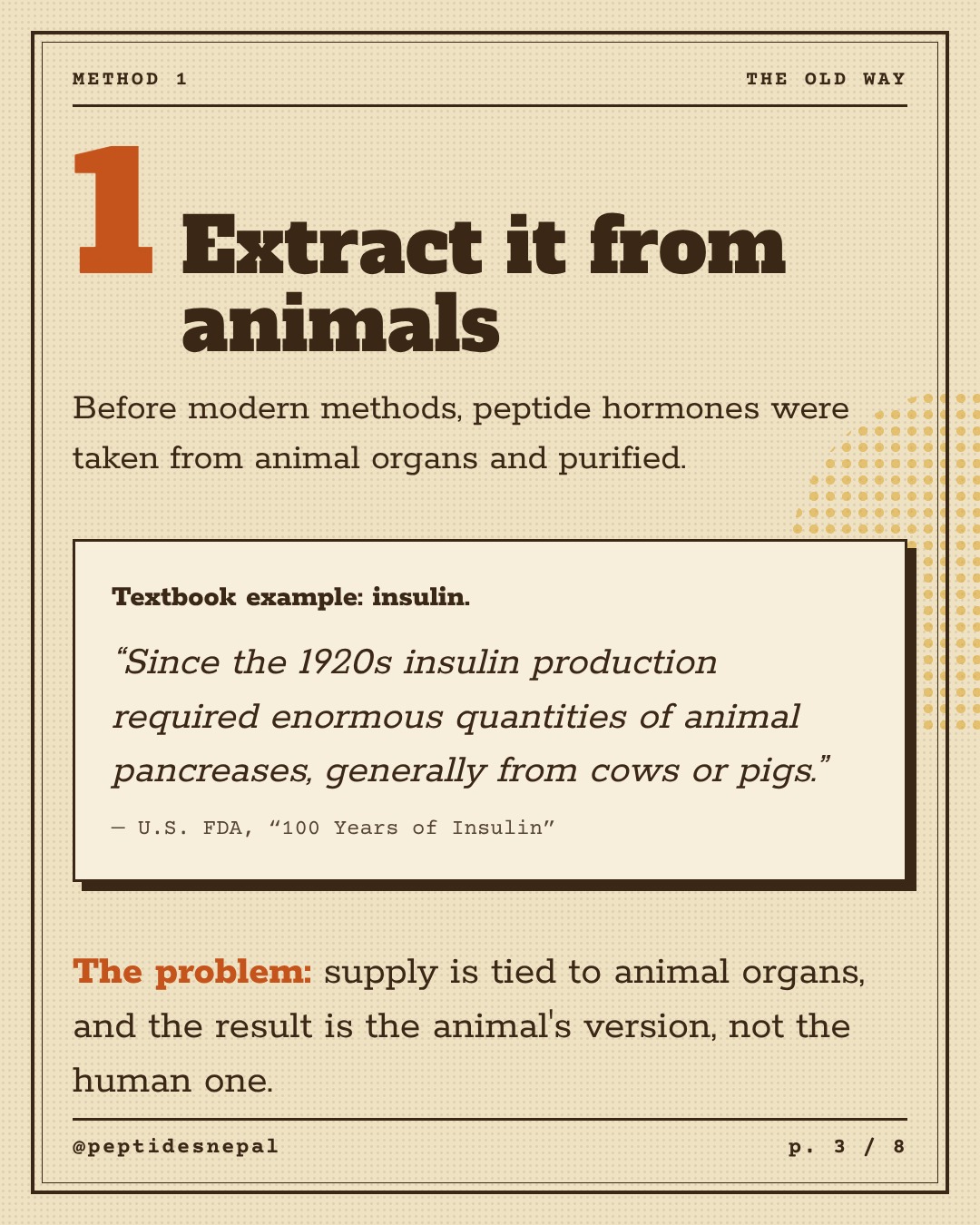
1️⃣ Extraction: early insulin came from cow and pig pancreas.
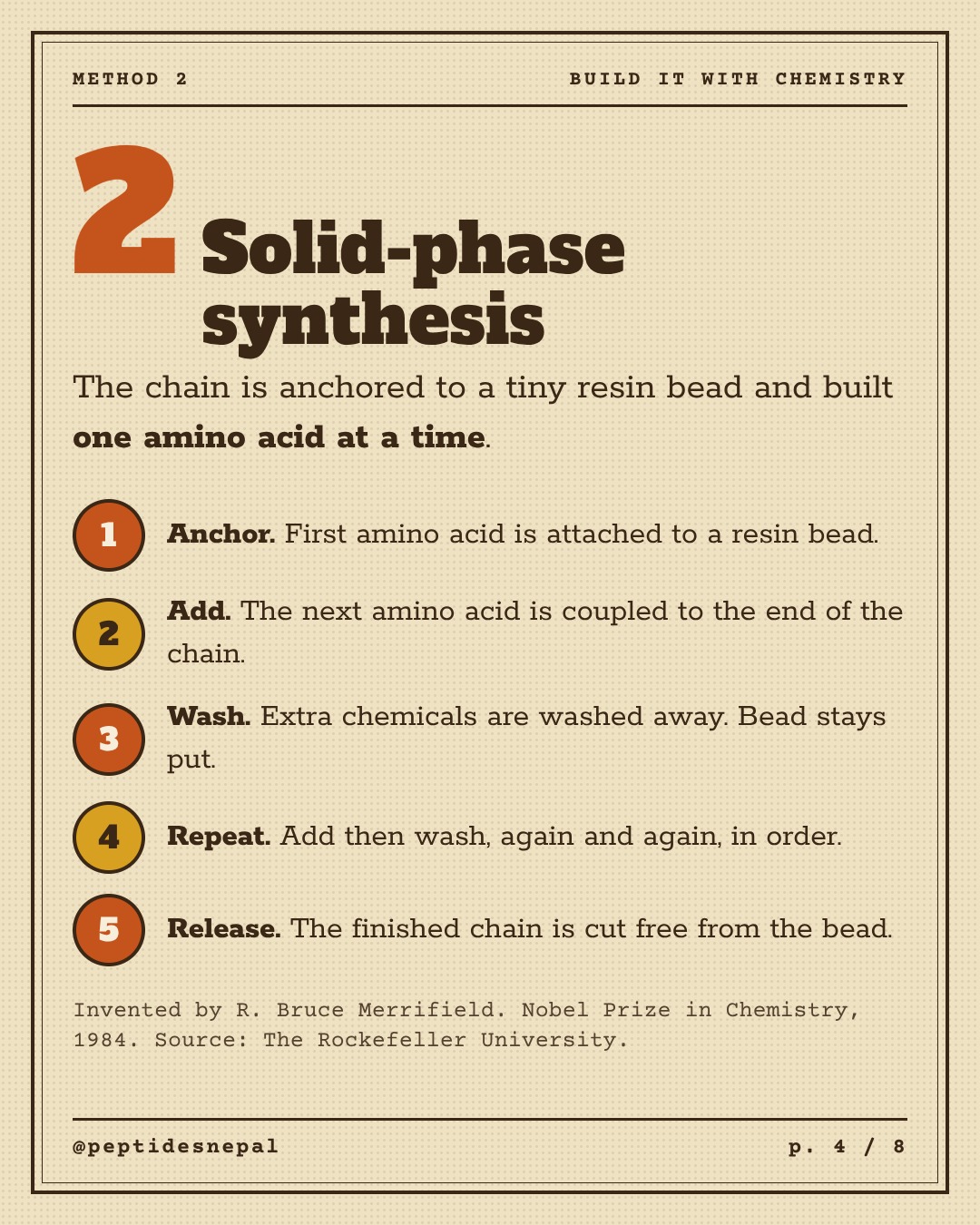
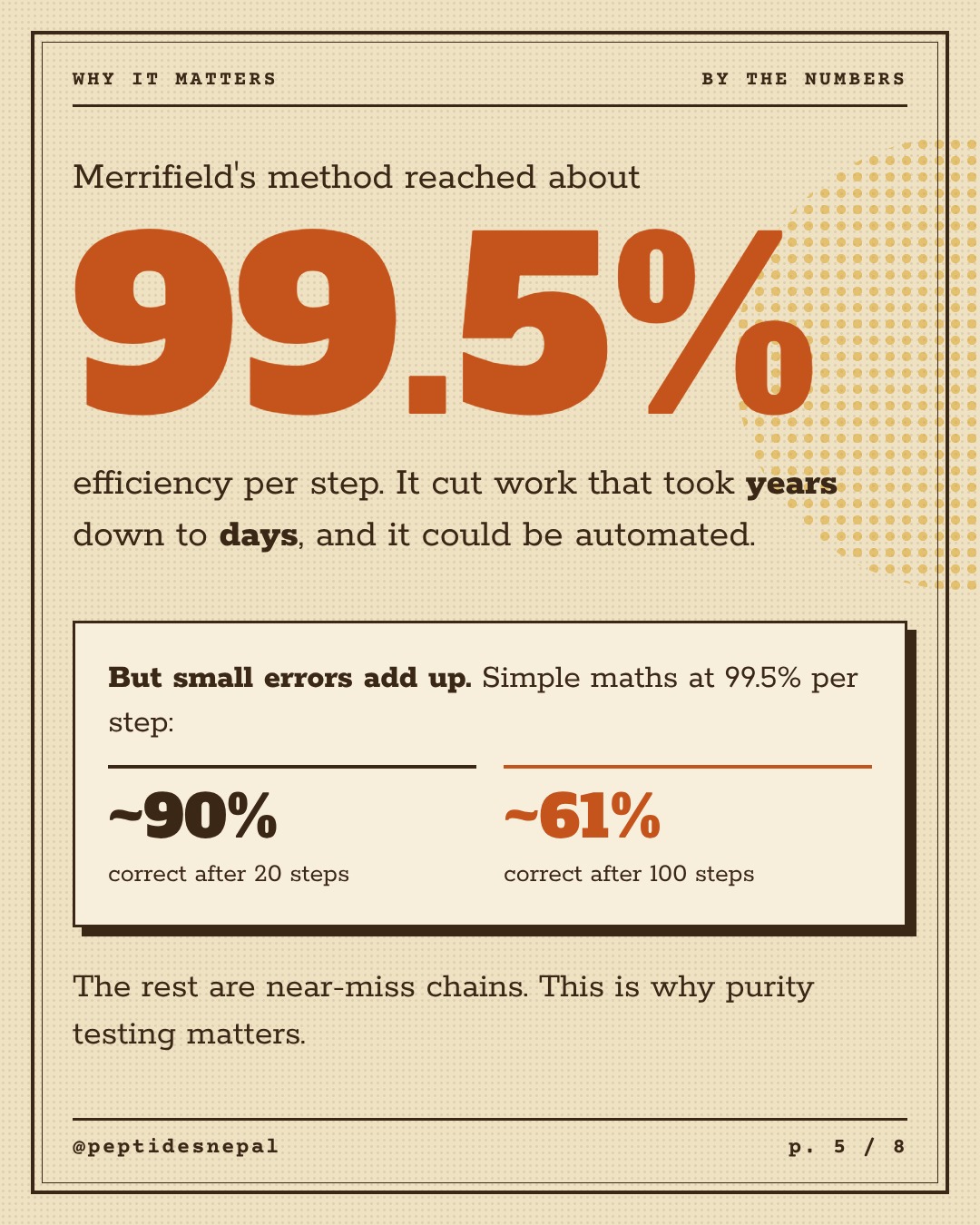
2️⃣ Chemical synthesis: Merrifield's solid-phase method adds one amino acid at a time on a resin bead (Nobel Prize, 1984).
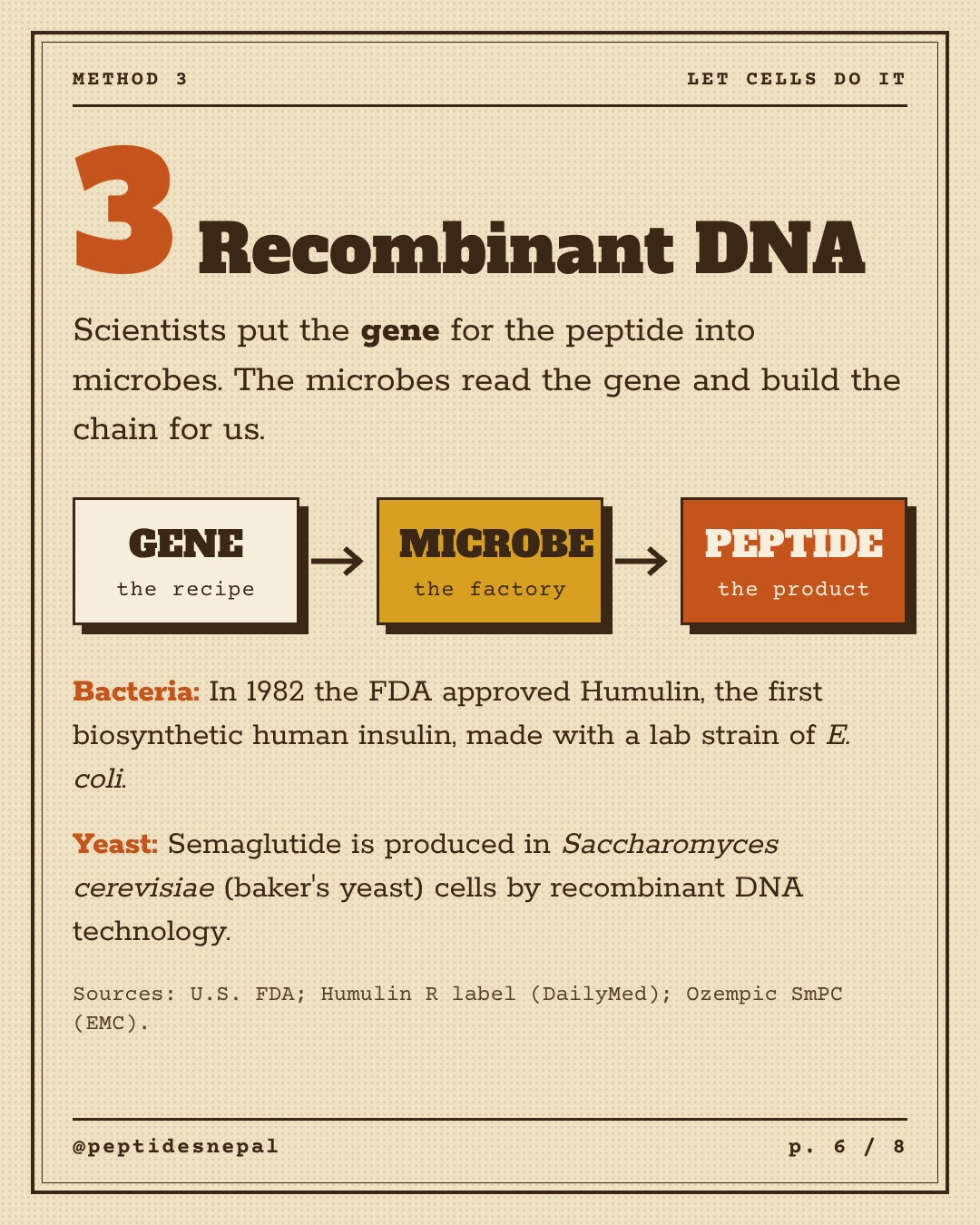
3️⃣ Recombinant DNA: microbes read a gene and build it. Humulin (1982) used E. coli; semaglutide is made in yeast.
Small errors add up over long chains, which is why testing purity matters.
📌 Save this as your peptide manufacturing cheat sheet.
📤 Send this to the friend who loves science class.
Quick question: which method surprised you most, 1, 2 or 3?
Follow @peptidesnepal for peptide science in plain words.
Education only — not medical advice.
Sources
Sources 📚
• U.S. FDA — 100 Years of Insulin: fda.gov/about-fda/fda-history-exhibits/100-years-insulin
• Humulin R prescribing information (DailyMed, NIH): dailymed.nlm.nih.gov
• Ozempic Summary of Product Characteristics (EMC): medicines.org.uk/emc/product/9750/smpc
• The Rockefeller University — R. Bruce Merrifield, 1984 Nobel Prize in Chemistry: rockefeller.edu
• 90% / 61% figures = simple maths: 0.995^20 and 0.995^100