Peptides Nepal

Guides › Semaglutide

Semaglutide: what the research says

Also known as Ozempic, Wegovy, Rybelsus.

Approved Semaglutide is a licensed medicine in at least one country, prescribed by a doctor.

Key facts

Class
A GLP-1 receptor agonist: a copy of the gut hormone GLP-1 with a fatty-acid side chain that makes it last about a week.
How it works
Helps the body release insulin when blood sugar is high, lowers glucagon, slows stomach emptying, and acts on appetite areas of the brain.
Main trial result
In the STEP 1 trial, adults without diabetes lost about 14.9% of body weight over 68 weeks on average, compared with 2.4% on placebo, alongside diet and exercise.
Side effects
Common: nausea, diarrhea, vomiting, constipation, stomach pain. Less common but serious: pancreatitis, gallbladder problems, kidney injury from dehydration. Boxed warning: thyroid C-cell tumors seen in rodents.

Anti-doping (WADA) status

Not on WADA's 2026 Prohibited List, but WADA monitors it to look for misuse. Athletes should check current rules with their anti-doping body.

Status in Nepal

Approved in the US (FDA) and the EU (EMA). We could not confirm its registration with Nepal's Department of Drug Administration. It is a prescription medicine: use only under a doctor's care.

Sources

This page explains research. It is not a recommendation to use Semaglutide. Talk to a doctor before using any medicine.
Instagram posts about Semaglutide

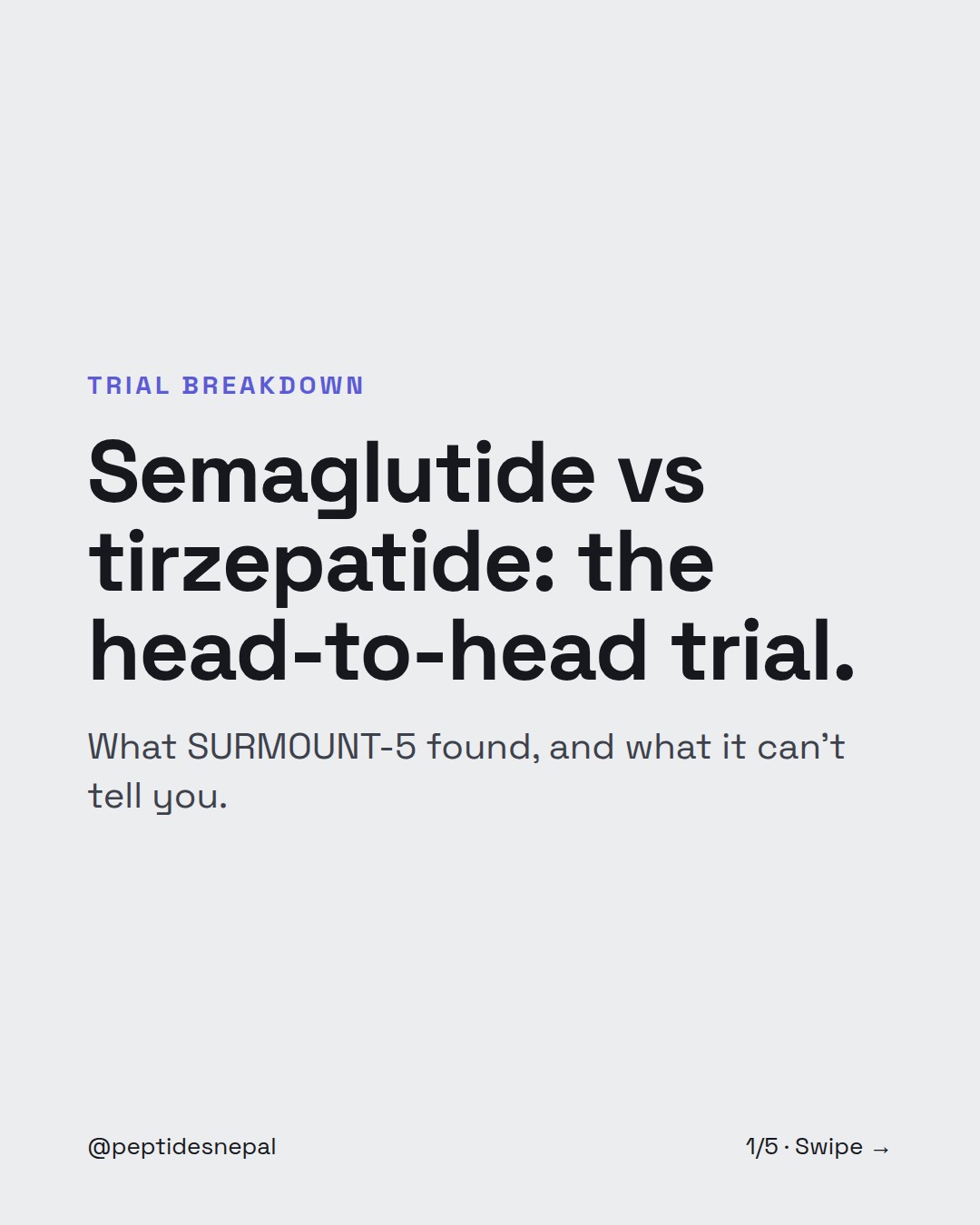
Semaglutide vs tirzepatide: the head-to-head trial

→ SURMOUNT-5: 751 adults with obesity (no type 2 diabetes), 72 weeks. → Tirzepatide: −20.2% average body weight (about 22.8 kg). → Semaglutide: −13.7%…

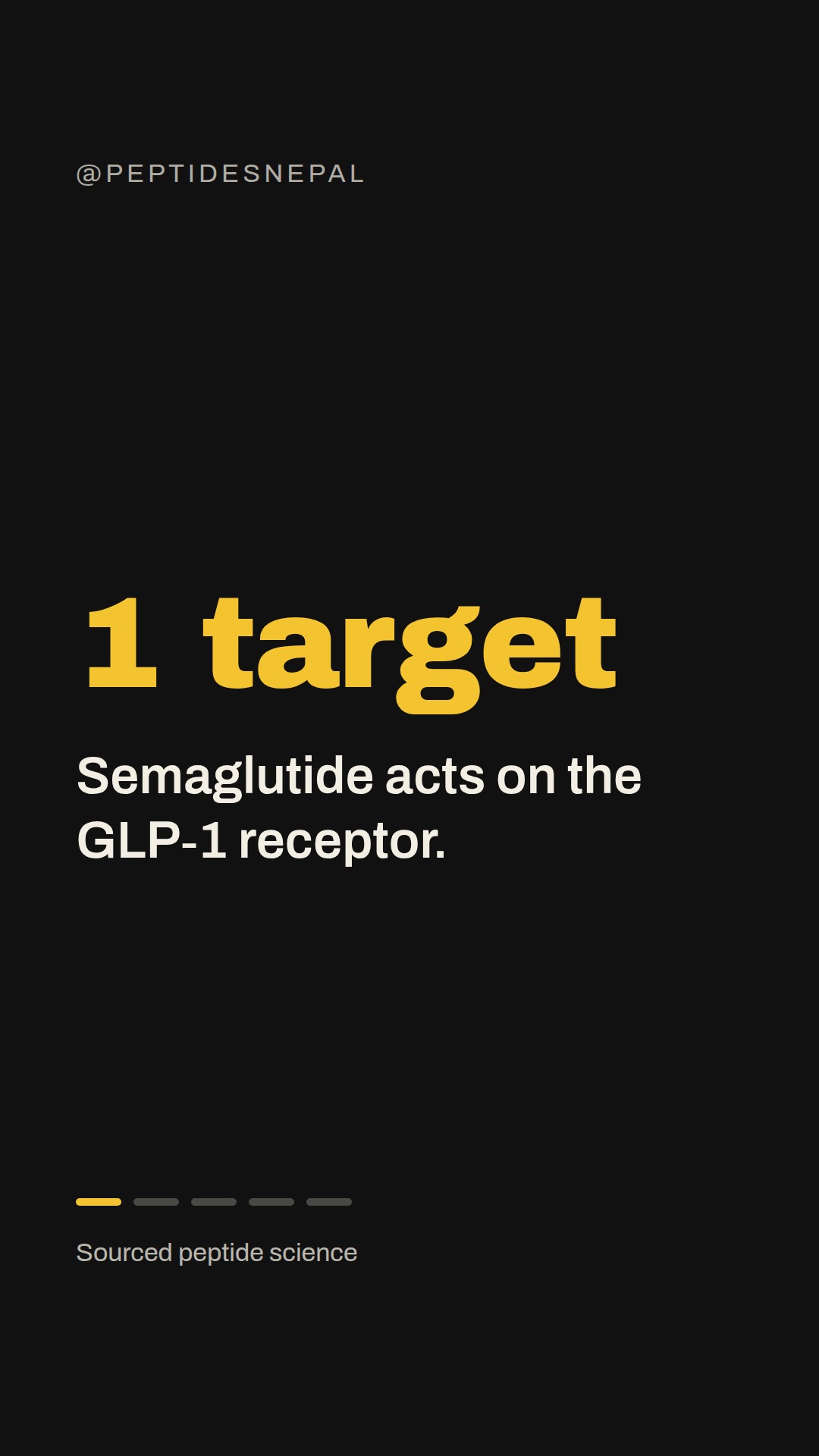
One molecule, two hormone signals

→ Semaglutide acts on one receptor: GLP-1. → Tirzepatide acts on two: GIP and GLP-1. → It's a single peptide of 39 amino acids. → Tomorrow: the…

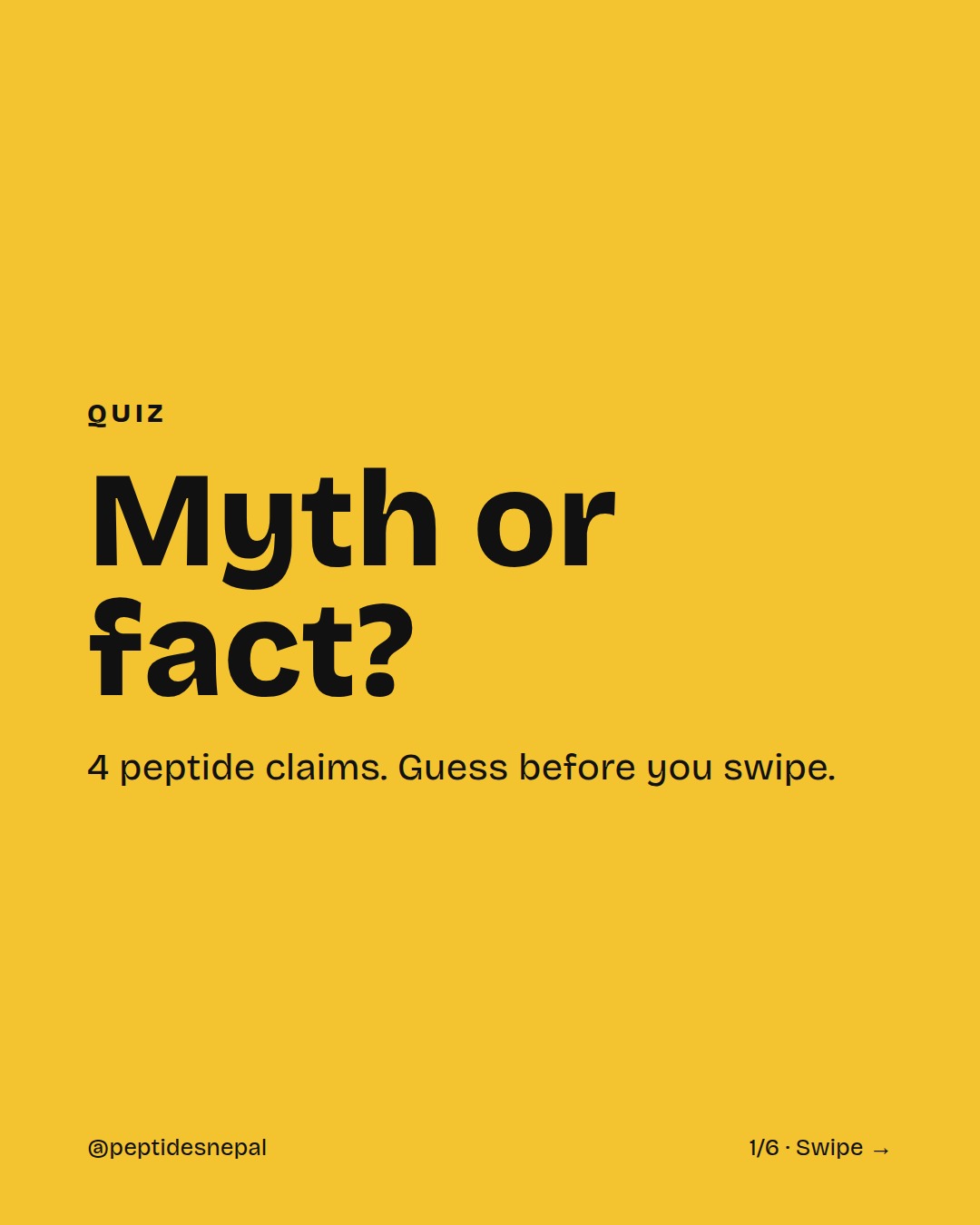
Myth or fact? 4 peptide claims Guess before you swipe.

1. BPC-157 is an approved medicine. 2. BPC-157 and TB-500 are banned in tested sport. 3. Semaglutide and tirzepatide act on the same single receptor. 4…

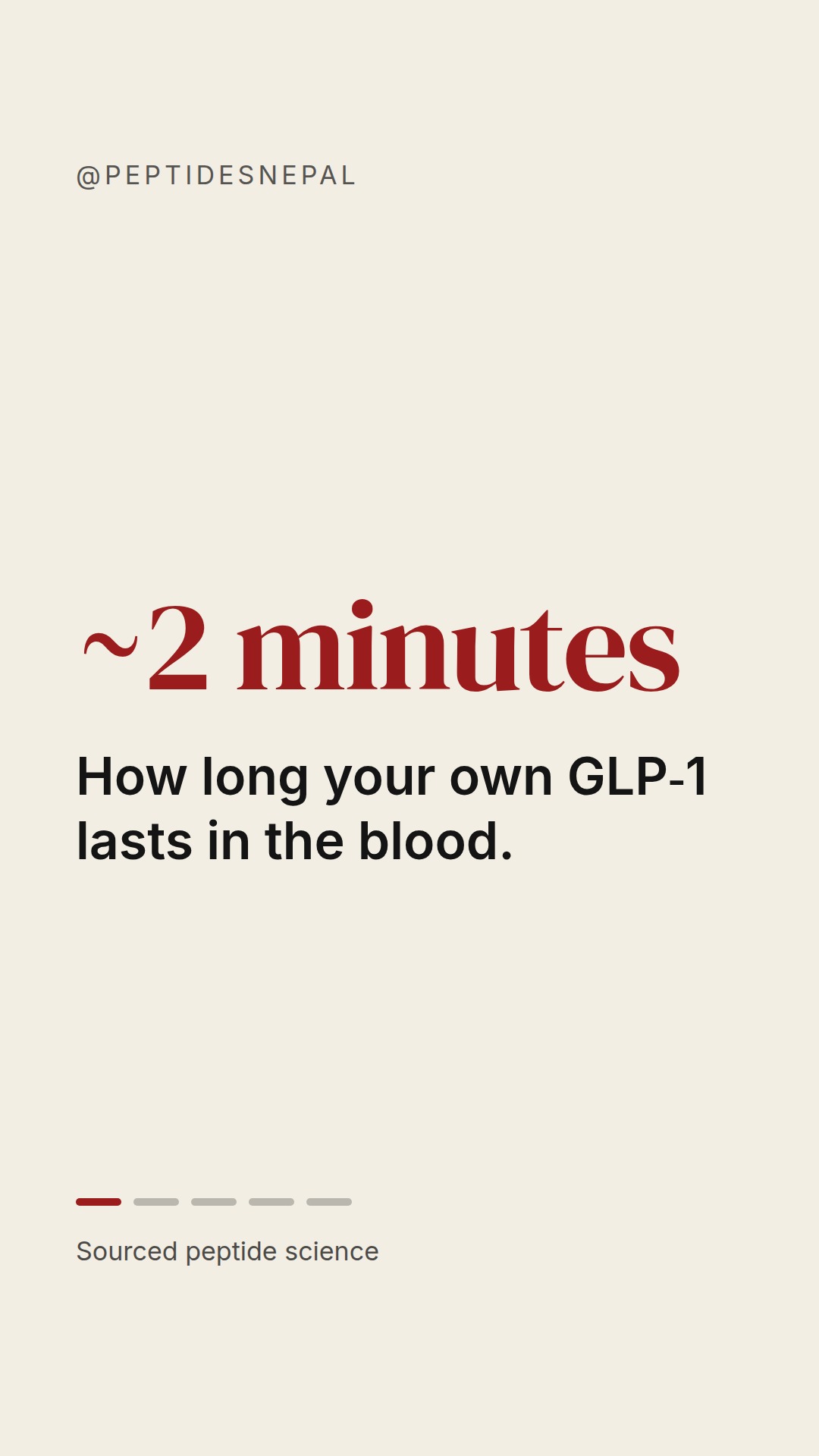
2 minutes vs 1 week Same hormone family, very different lifespan.

→ Your own GLP-1 is cut apart by the enzyme DPP-4 within about 2 minutes. → Semaglutide has a half-life of about one week. → Two tricks: changes that…

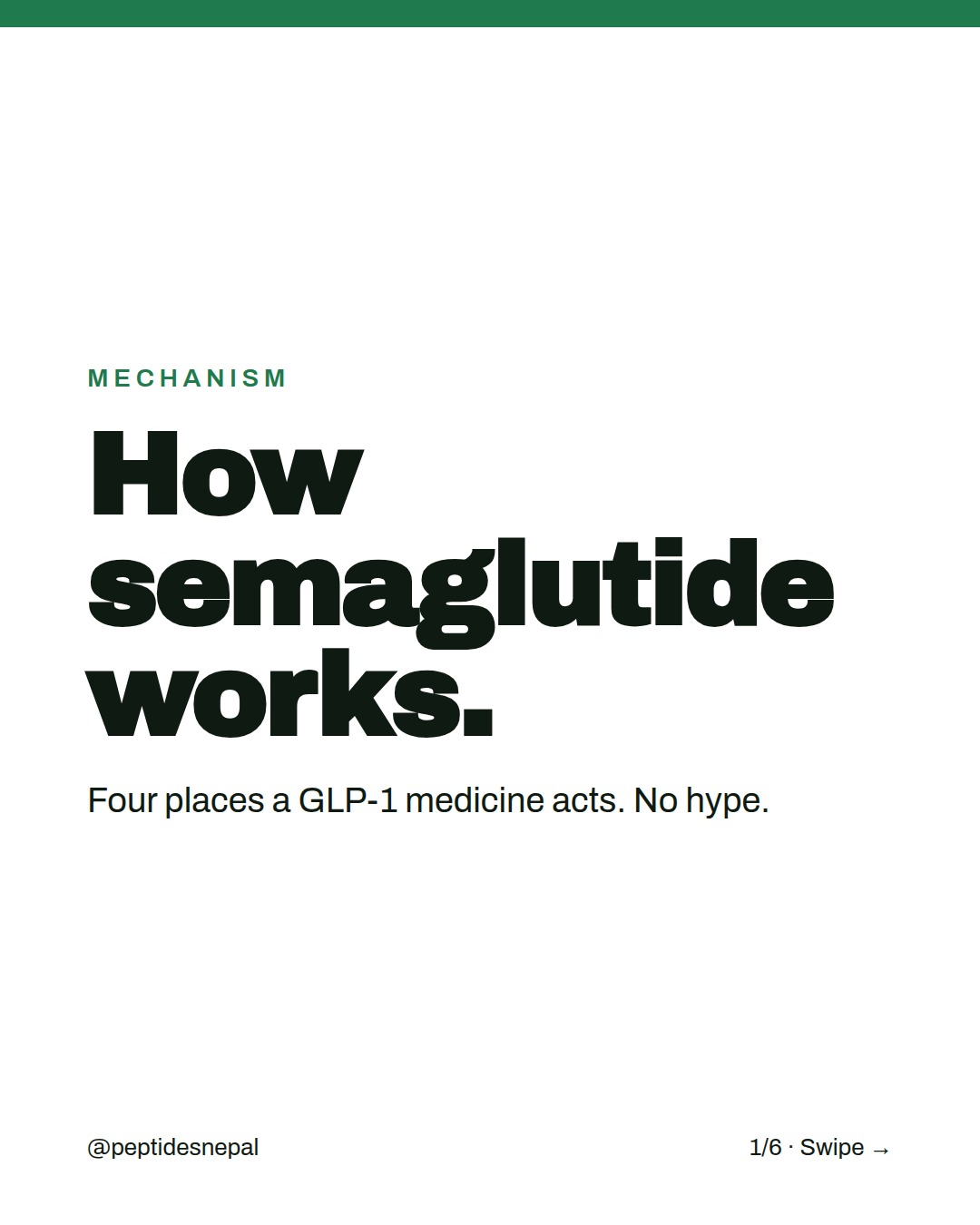
How semaglutide works, without the hype

→ GLP-1 is a hormone your gut releases after you eat. → Natural GLP-1 lasts about 2 minutes in the blood. Semaglutide is modified to last about a week. →…

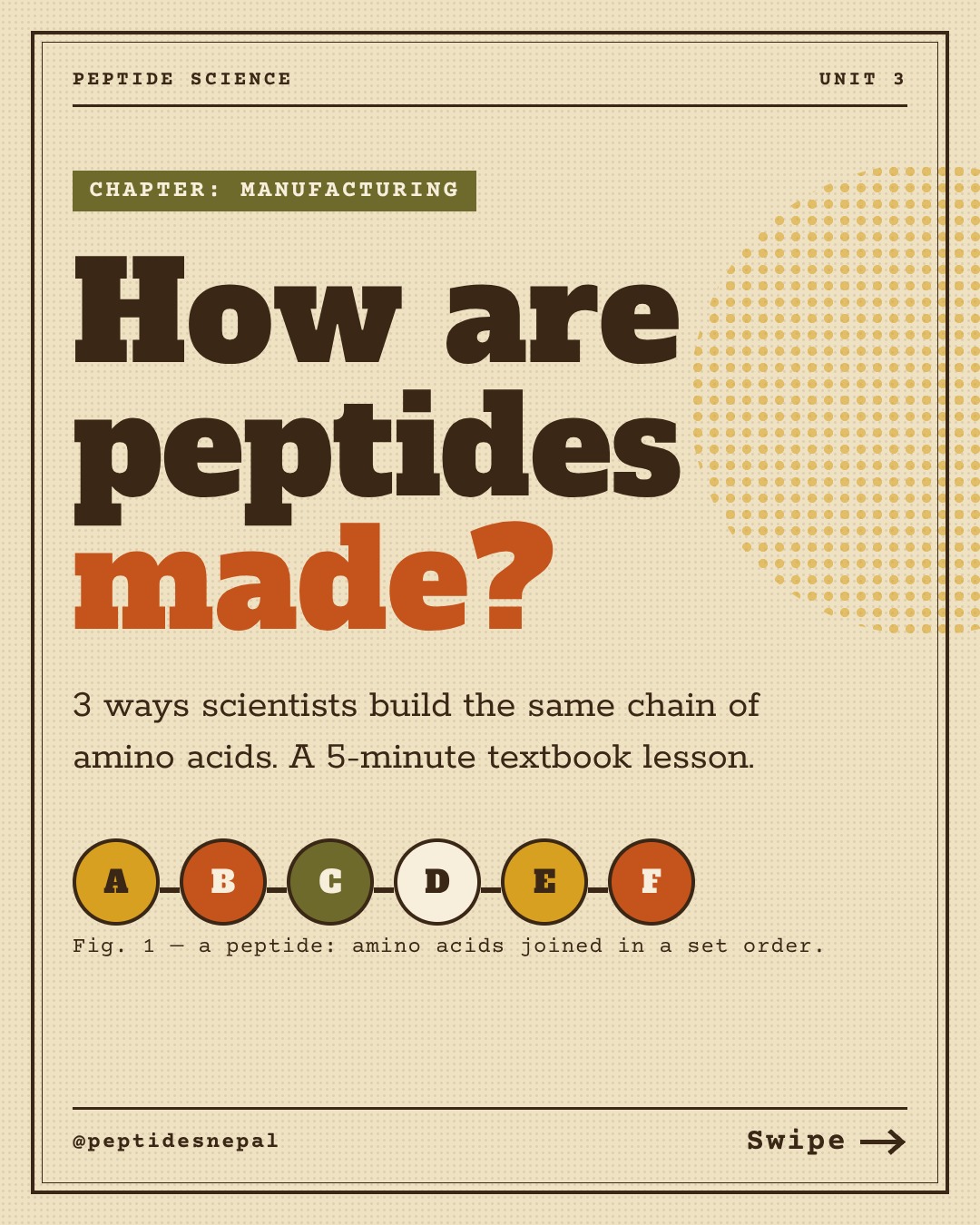
How are peptides made? 3 methods, explained like a textbook

Every peptide is a chain of amino acids in a set order. Science has 3 main ways to build that chain: 1 Extraction: early insulin came from cow and pig…

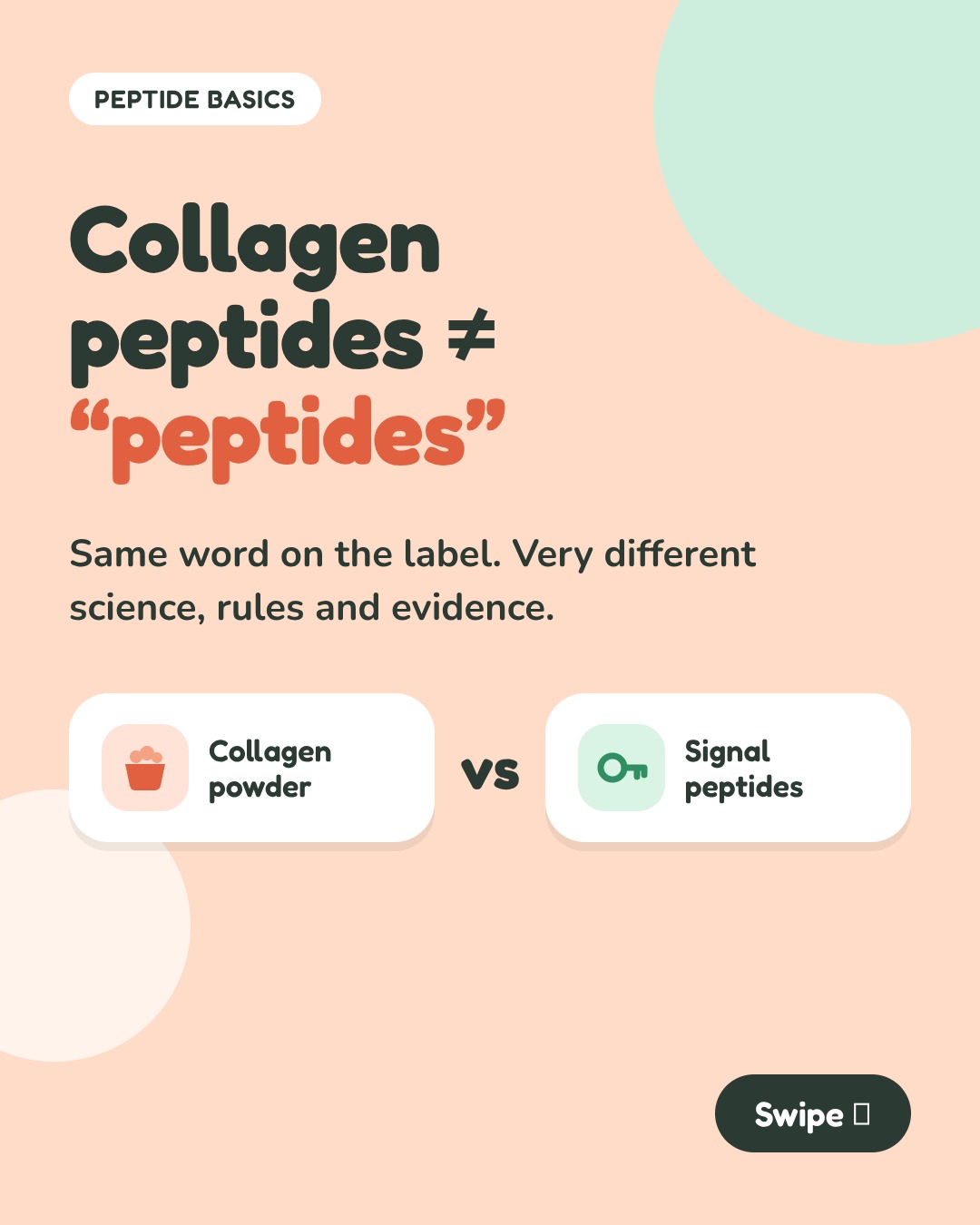
Collagen peptides vs "peptides": same word, very different science

→ Collagen powder is collagen from animal bone, hide and skin, chopped into a mix of many small pieces. → Your gut digests it like food protein. Some…

Why most peptides aren't taken as pills

Your digestive system treats peptides like food protein. Acid and enzymes (like pepsin and trypsin) cut the peptide bonds apart. The pieces that survive…

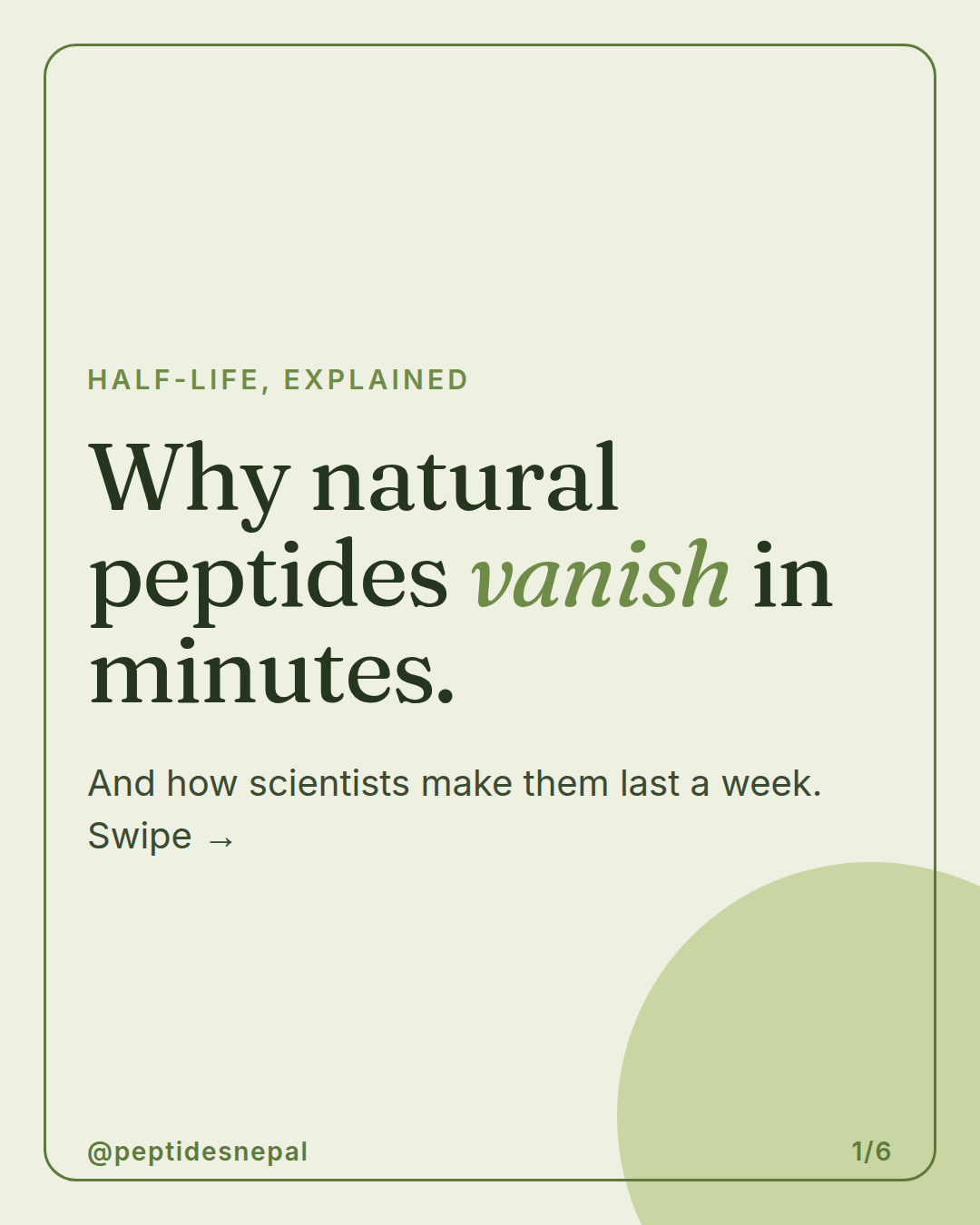
Why do natural peptides vanish in minutes?

Your blood is full of enzymes (proteases) that cut peptide bonds, and small peptides get filtered out by the kidneys. Natural GLP-1 lasts about 2 minutes…

You've heard of these peptides already

Insulin: 51 amino acids. It controls blood sugar and has been used to treat diabetes for over 100 years. Oxytocin: 9 amino acids. It's used in hospitals…

Other guides

BPC-157 Not approved

A lab-made chain of 15 amino acids, based on part of a protein first found in human stomach juice.

TB-500 (thymosin beta-4 fragment) Not approved

A short lab-made piece (7 amino acids, Ac-LKKTETQ) of the natural protein thymosin beta-4. It is not the full protein.

Tirzepatide Approved

Acts on two gut-hormone receptors: GLP-1 and GIP.

Retatrutide In trials

An experimental drug that acts on three hormone receptors: GLP-1, GIP and glucagon.

GHK-Cu Cosmetic ingredient, not a medicine

A tiny peptide of three amino acids bound to copper, found naturally in blood. First described by Dr Loren Pickart in 1973.