Peptides Nepal

Posts › How to read a peptide study in 60 seconds
How to read a peptide study in 60 seconds
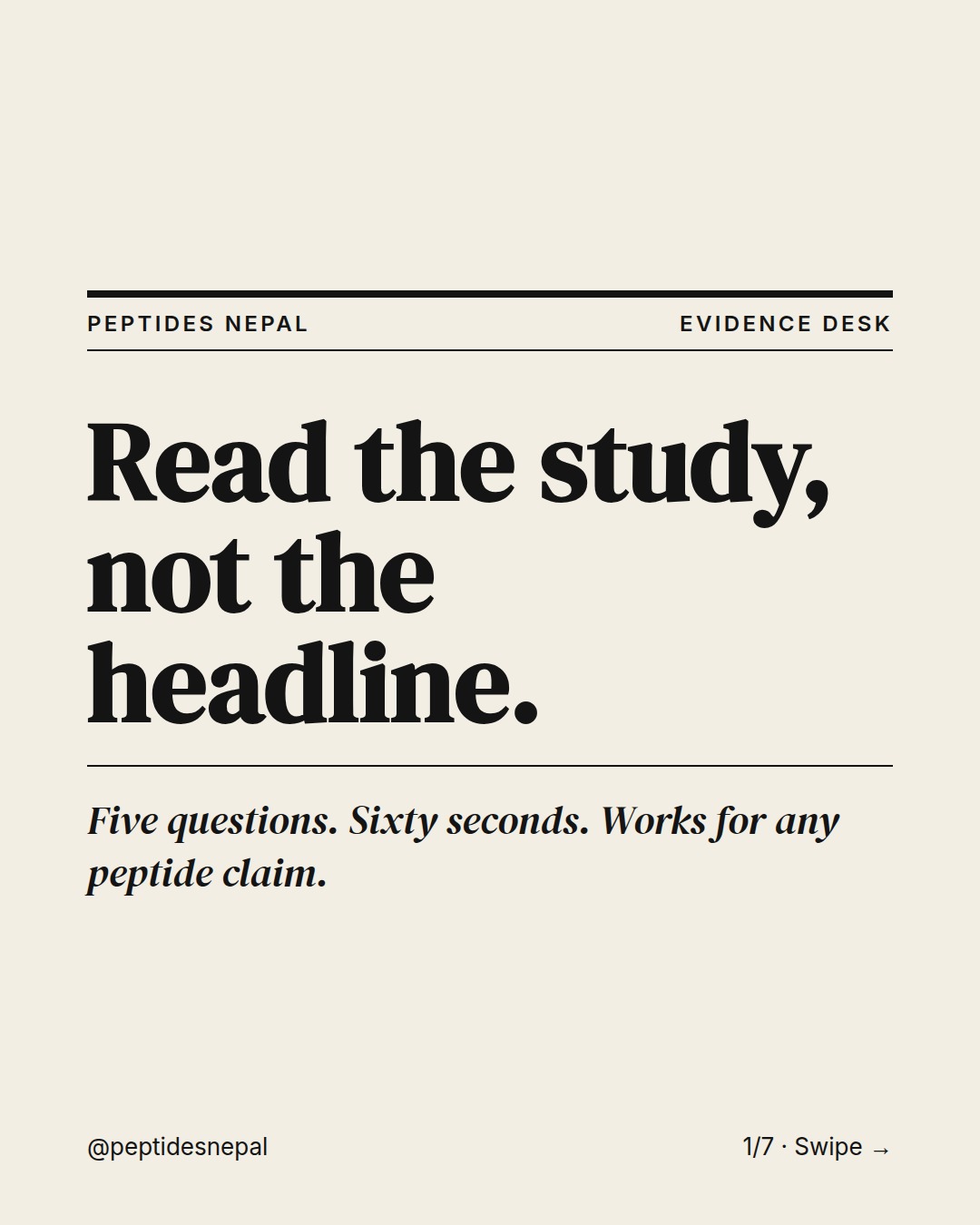
Read the study, not the headline. Five questions. Sixty seconds. Works for any peptide claim.
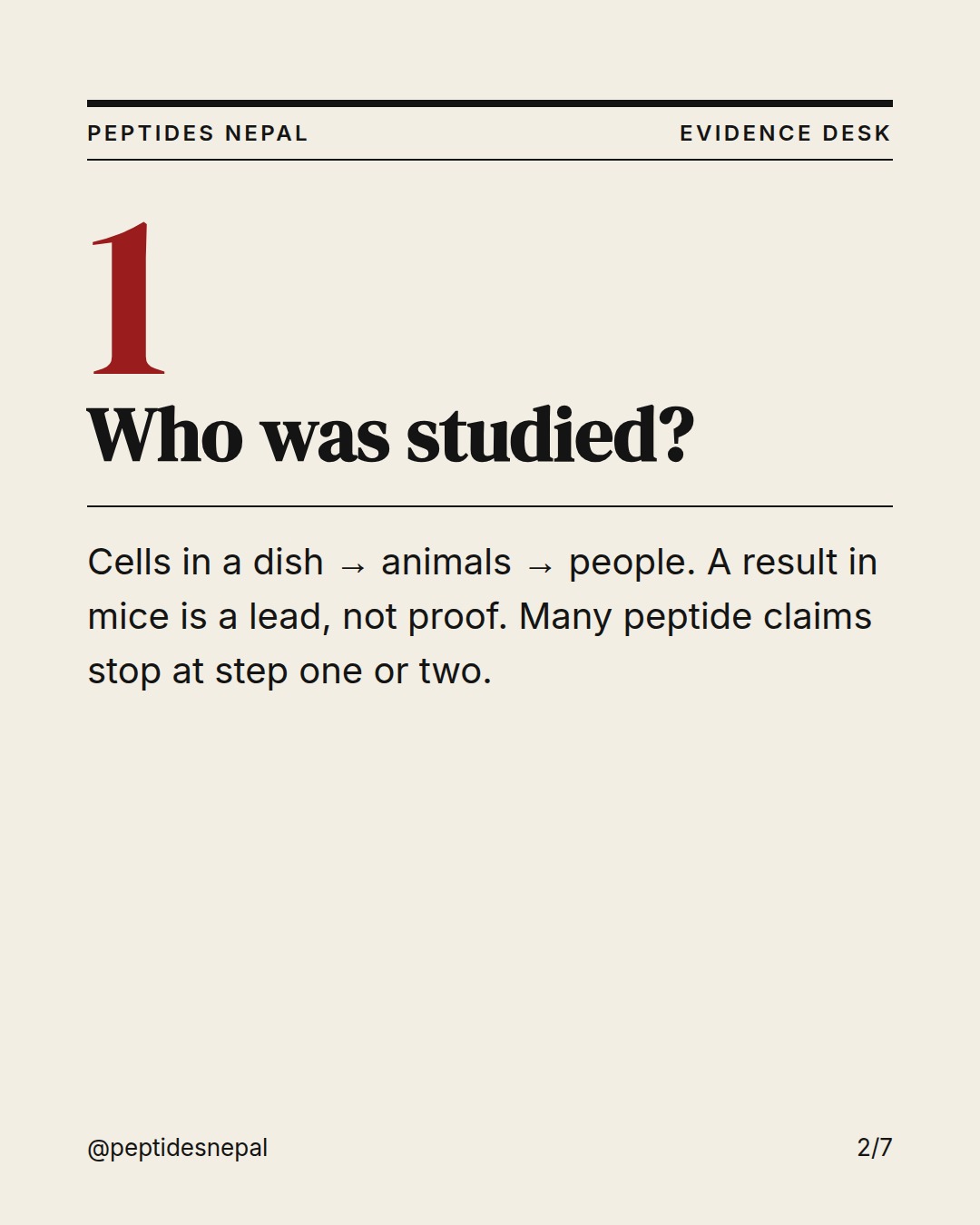
Question 1: Who was studied? Cells in a dish → animals → people. A result in mice is a lead, not proof. Many peptide claims stop at step one or two.
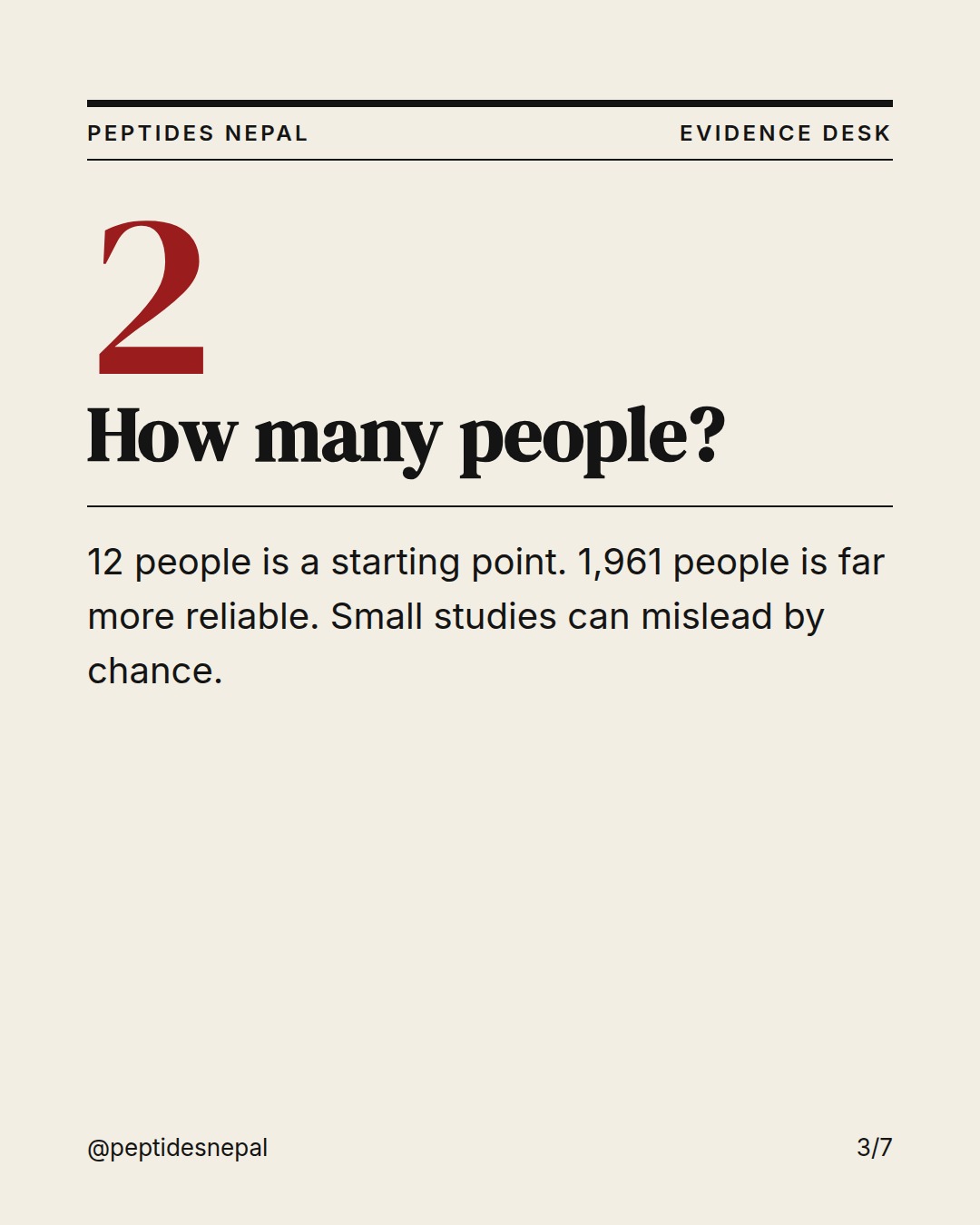
Question 2: How many people? 12 people is a starting point. 1,961 people is far more reliable. Small studies can mislead by chance.
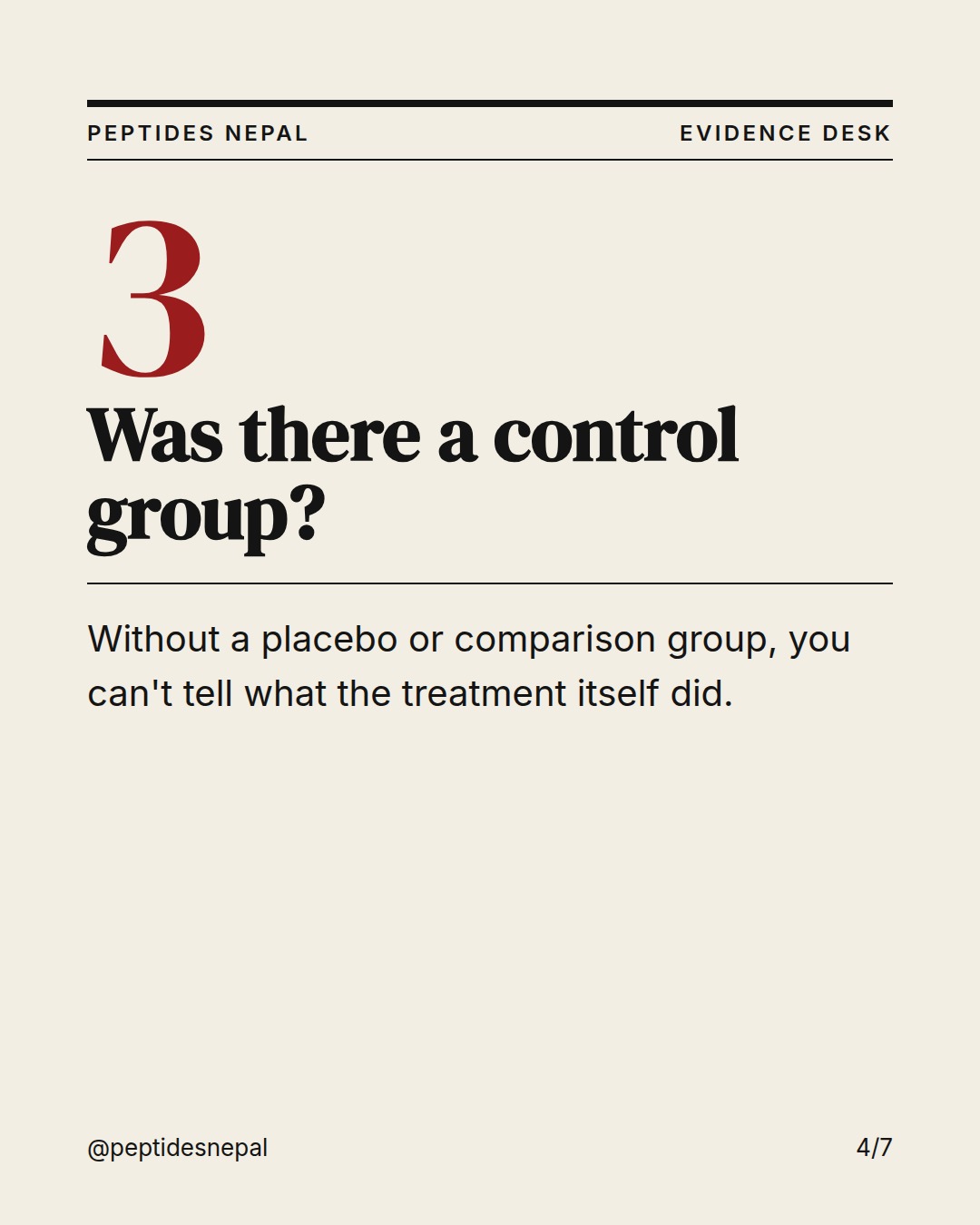
Question 3: Was there a control group? Without a placebo or comparison group, you can't tell what the treatment itself did.
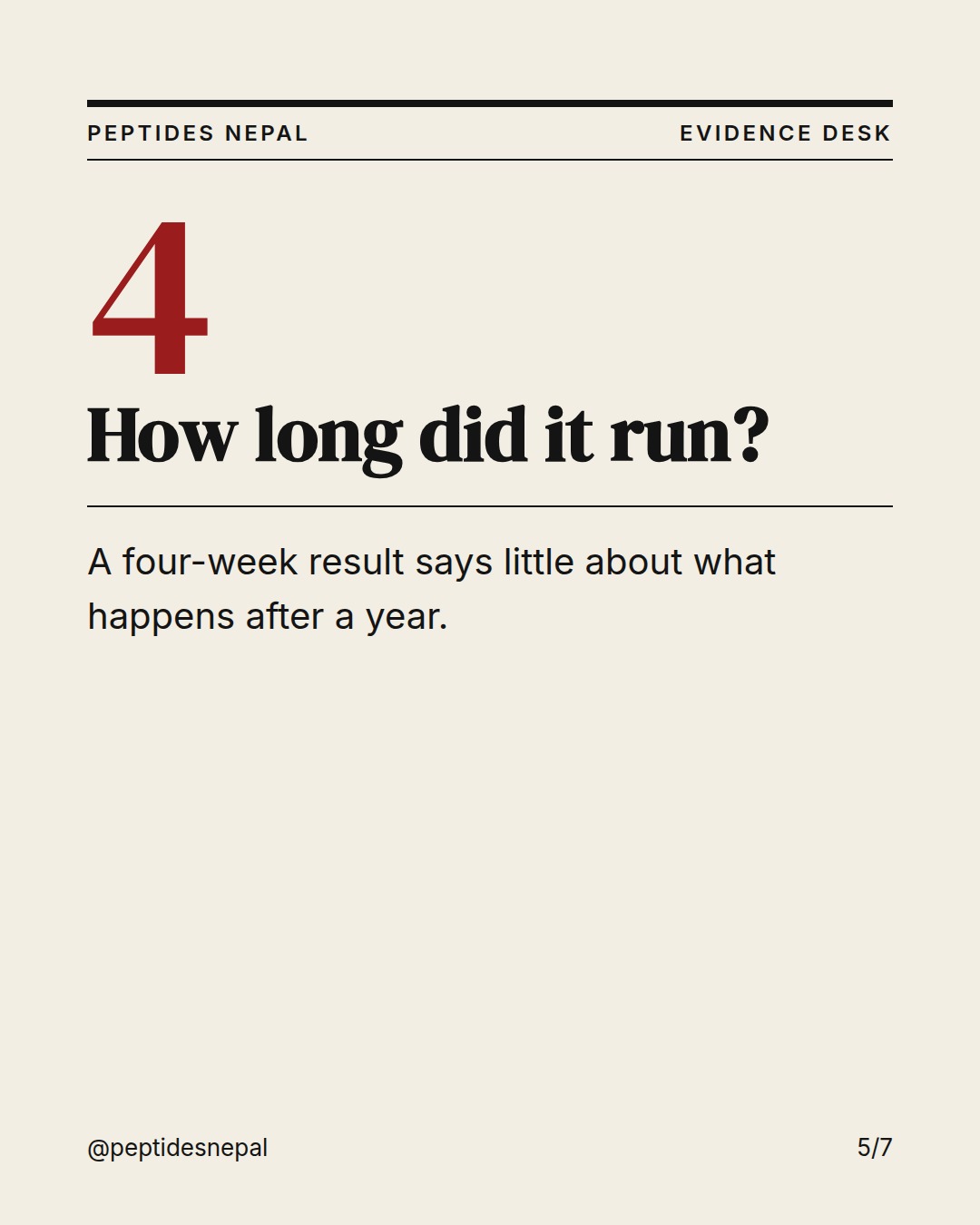
Question 4: How long did it run? A four-week result says little about what happens after a year.
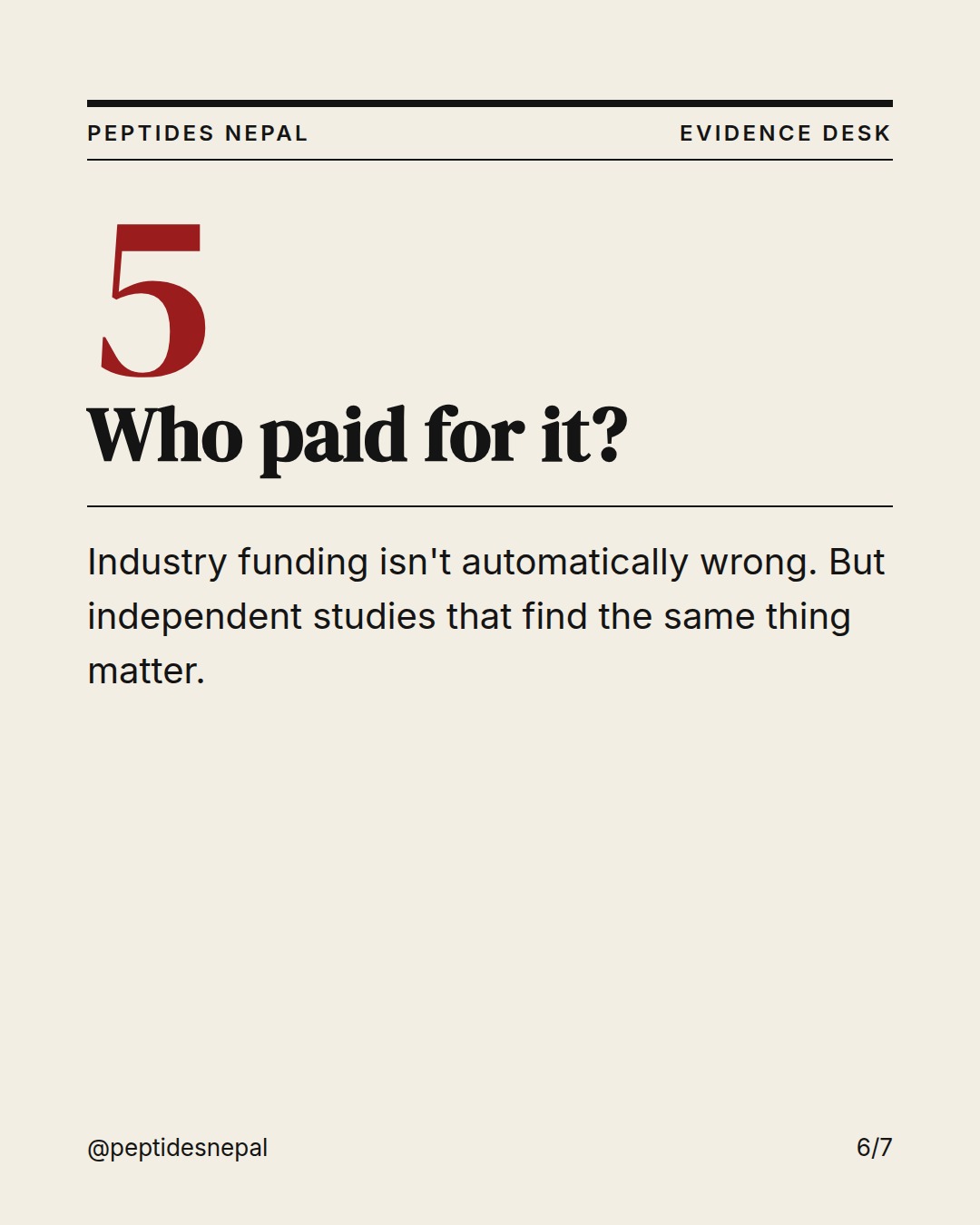
Question 5: Who paid for it? Industry funding isn't automatically wrong. But independent studies that find the same thing matter.
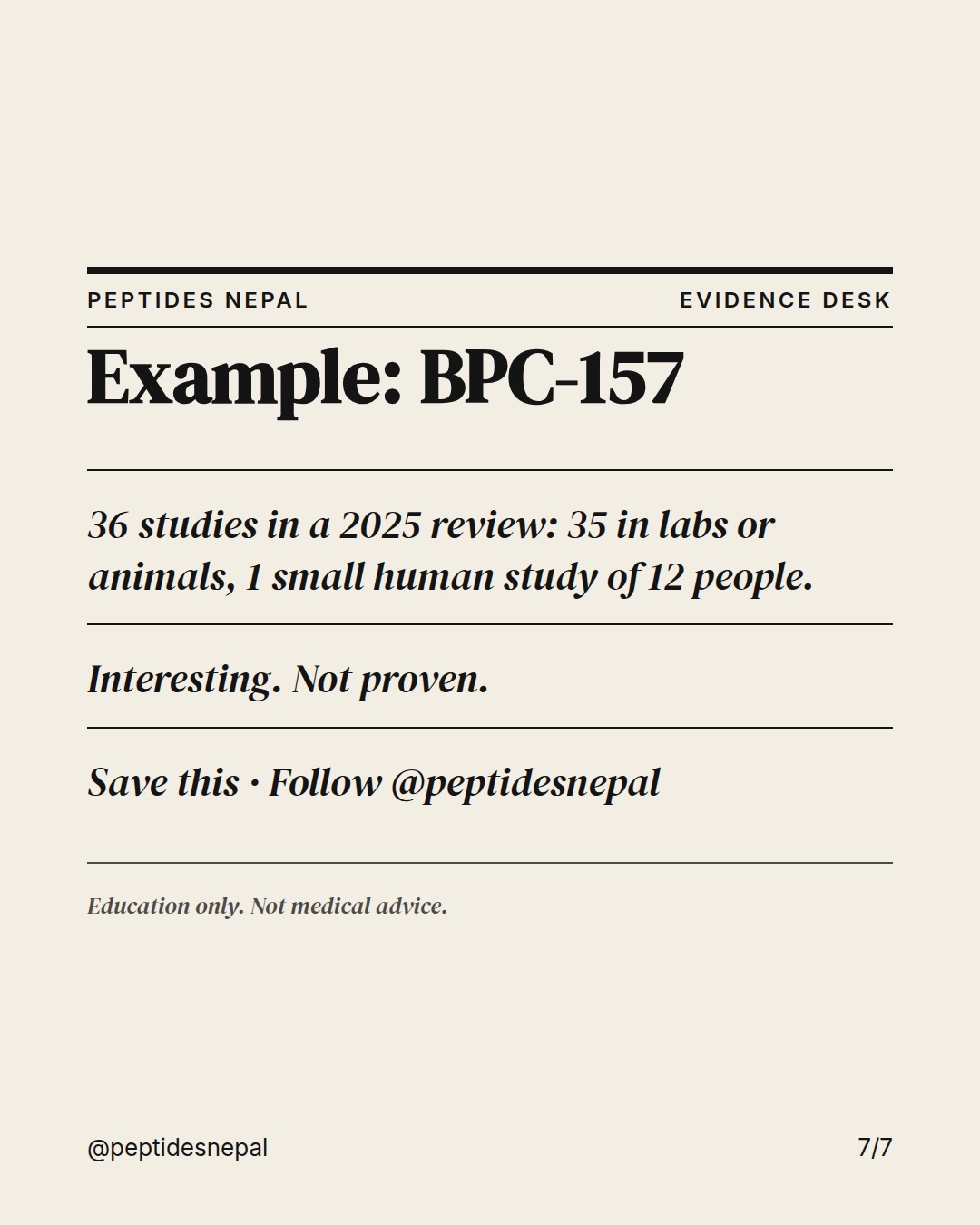
Example: BPC-157 36 studies in a 2025 review: 35 in labs or animals, 1 small human study of 12 people. Interesting. Not proven. Save this · Follow @peptidesnepal Education only. Not medical advice.

1️⃣ Who was studied? Cells → animals → people. Mice are a lead, not proof.
2️⃣ How many people? 12 is a start. 1,961 is far more reliable.
3️⃣ Was there a control group? No placebo, no clear answer.
4️⃣ How long? Four weeks says little about a year.
5️⃣ Who paid? Look for independent studies that agree.

Example: a 2025 review of BPC-157 found 36 studies — 35 in labs or animals, 1 small human study (12 people).

📌 Save this checklist. 📤 Send it to the friend who forwards every "miracle" post.

Which question will you use first?

Follow @peptidesnepal for more info
Visit our website — link in bio for detailed info like this!

Education only — not medical advice.

Sources

Sources 📚
• Vasireddi N, et al. Emerging Use of BPC-157 in Orthopaedic Sports Medicine: A Systematic Review. HSS Journal, 2025. doi:10.1177/15563316251355551
• Wilding JPH, et al. STEP 1. NEJM, 2021;384:989–1002 (1,961 participants).

View this post on Instagram →

Related guides

BPC-157 Not approved

A lab-made chain of 15 amino acids, based on part of a protein first found in human stomach juice.