BPC-157: what the research says
Also known as Body Protection Compound-157, PL 14736, PL-10, Bepecin.
Not approved BPC-157 is studied mostly in animals or the lab and not approved as a medicine.
Key facts
- What it is
- A lab-made chain of 15 amino acids, based on part of a protein first found in human stomach juice.
- What it was studied for
- Blood-vessel growth, tendon and tendon-to-bone repair, and healing of the gut lining. These results come from rats and cell experiments, not from people.
- Human evidence
- Very little. One small ulcerative colitis trial (reported only as a conference abstract) and three tiny pilot studies. No large human trial has shown it works or is safe.
- FDA
- Not approved by the FDA or any other regulator. FDA has raised concerns about immune reactions and peptide impurities. A 2026 FDA advisory panel vote on compounding is not an approval.
Anti-doping (WADA) status
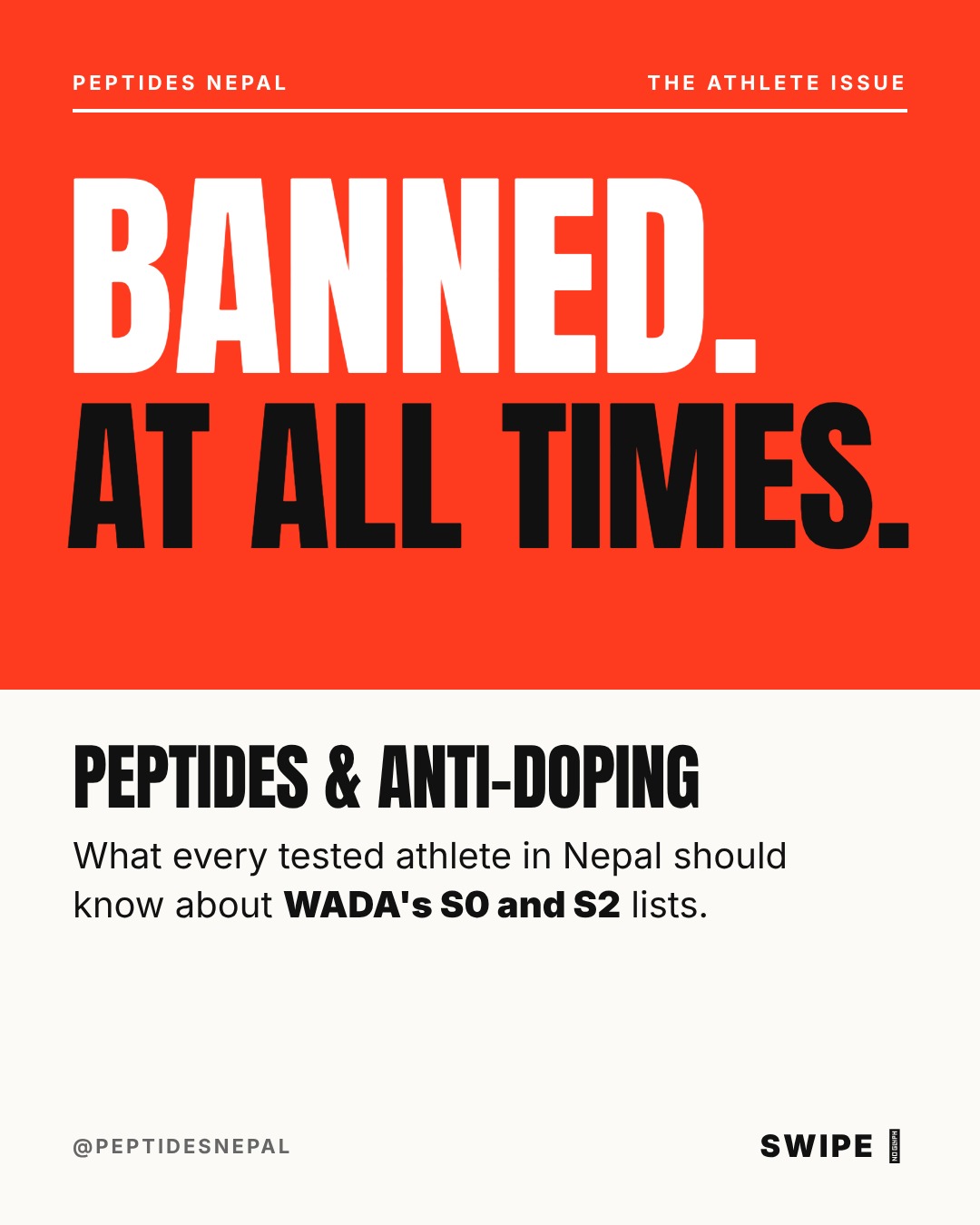
Prohibited by WADA at all times (in and out of competition) under S0, non-approved substances. It was added to the list in 2022.
Status in Nepal
Not approved as a medicine anywhere, so it is not expected to be registered with Nepal's Department of Drug Administration (DDA). Under Nepal's Drugs Act 2035, drugs must be registered before they are imported or sold.
Sources
- FDA briefing document on BPC-157, Pharmacy Compounding Advisory Committee (July 2026)
- Sikiric et al., Brain-gut axis and pentadecapeptide BPC 157 (Curr Neuropharmacol 2016, PubMed 27138887)
- Chang et al., The promoting effect of pentadecapeptide BPC 157 on tendon healing (J Appl Physiol 2011, rat study, PubMed 21030672)
- USADA: BPC-157 added to the 2022 WADA Prohibited List under S0
This page explains research. It is not a recommendation to use BPC-157. Talk to a doctor before using any medicine.